
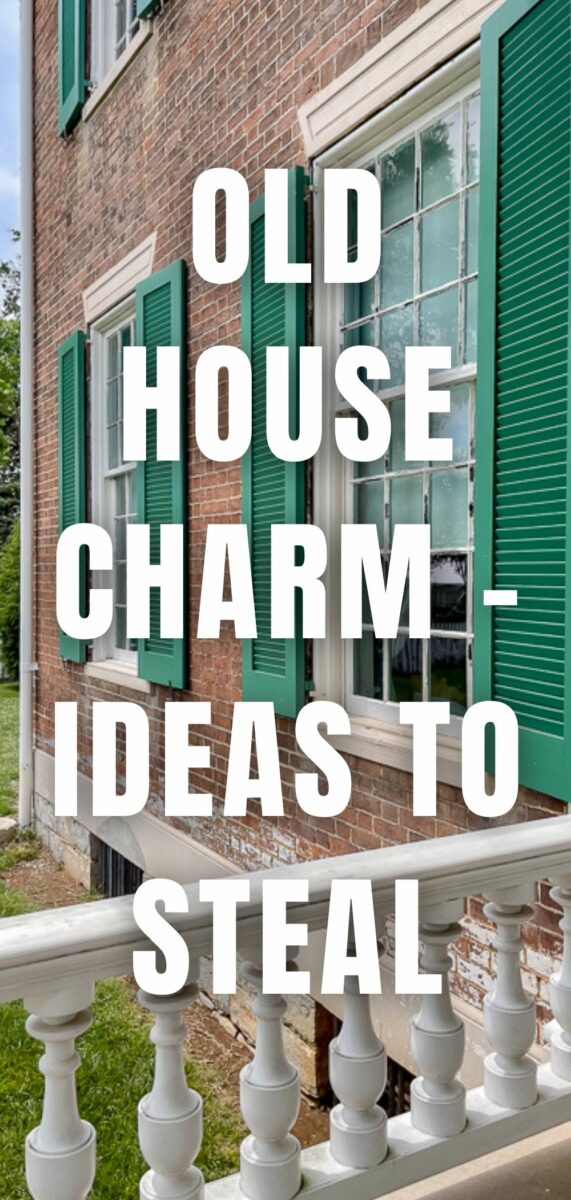
Do you wish your newer home had old house charm? Are you building a home, and you want it to look old? Then you’ve come to the right place, because after years and years of designing homes and traveling to look for ideas in old homes, I am here to share with you all the details you can borrow.
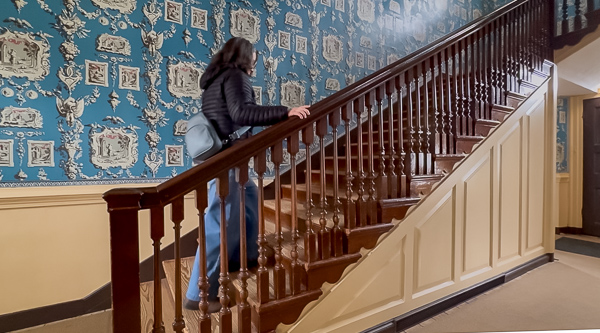
I have a confession. Every time I walk into an old or historic home, I am not just looking at the velvet ropes, the tour guide, or the estate sale items. I am looking at the newel post, the door hardware, and the color on the walls, to name a few.
Over the years, I have collected old house charm ideas from every historic home, inn, and estate sale I have visited, and today I am sharing my favorites with you.
Whether your home is a hundred years old, built last year, or you have plans to build a new old home, there is something here for you. Let’s get started.
What Old House Charm Ideas Are (And Why They Work in Any Home)
Old house charm ideas are simply the small or large, real details that give a home a sense of history. Trim, hardware, paint color, and the bones of a fireplace all count.
My own home is builder-grade. I have spent years adding trim, swapping hardware, and choosing paint colors that borrow straight from the old homes I love, and it has made all the difference.
You do not need a hundred-year-old house to get this look. You just need to know which details to copy.
Architectural Details Worth Copying
This is where old house charm starts. The bones of a room, more than any single piece of furniture, are what make a space feel like it has history.
Staircases
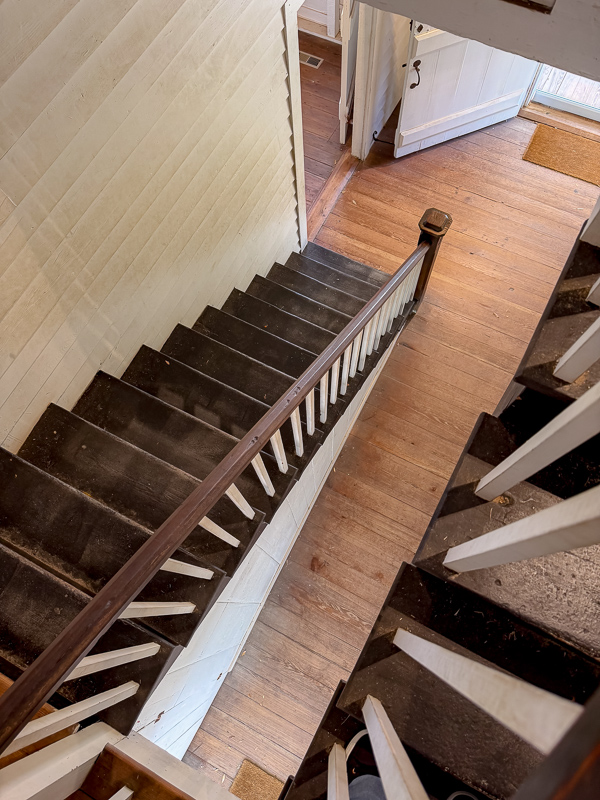
A staircase sets the tone for an entire home. At Bellevue, the staircase is simple and dark, against white shiplap walls.
At Hermitage, the staircase is fancier, set against a mural wall. Consider adding decorative pieces to the sides of your stairs.
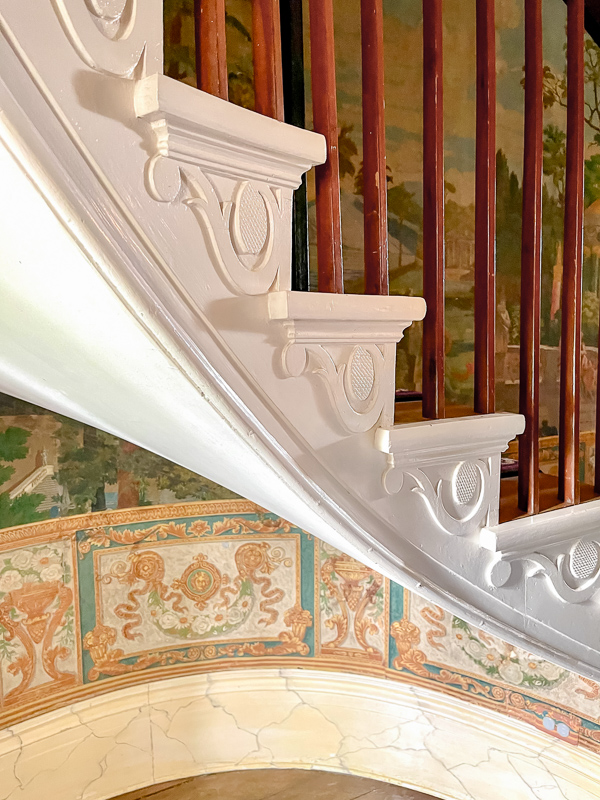
Neither one needs to be original to your house. A dark-stained stair tread, painted spindles, or even mounting a small collection on the wall beside your stairs can borrow the same feeling.
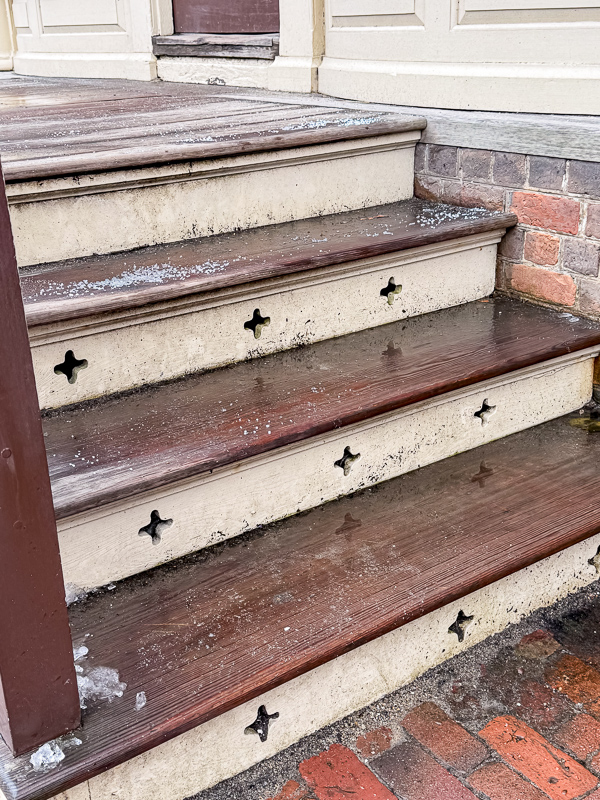
This next one is technically outside. The risers on this exterior staircase have a small carved cross worked into them in three places.
It is such a simple detail, and it would be just as pretty carried indoors on a staircase riser or even a stair skirt board.
Newel Posts
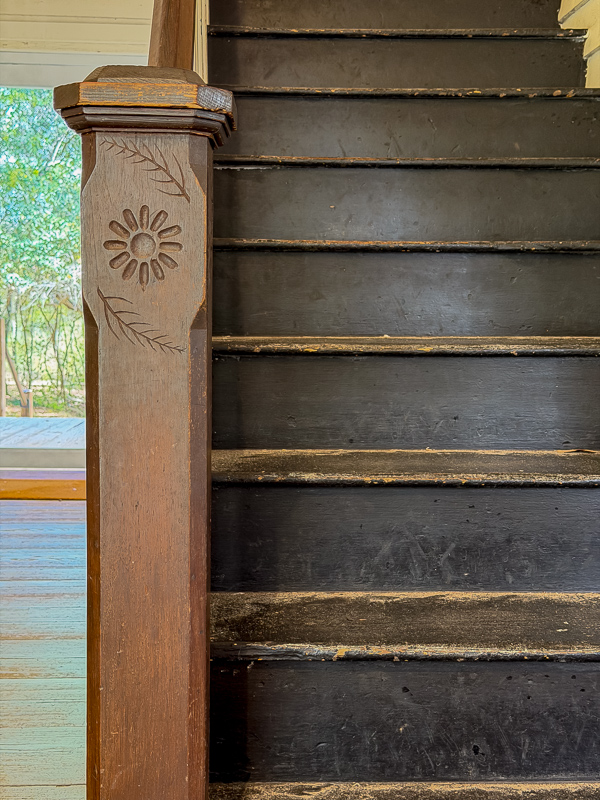
A newel post is one of the easiest details to notice and one of the hardest to fake, which is exactly why it is worth studying. The Bellevue post has a simple hand-carved rosette and wheat motif.
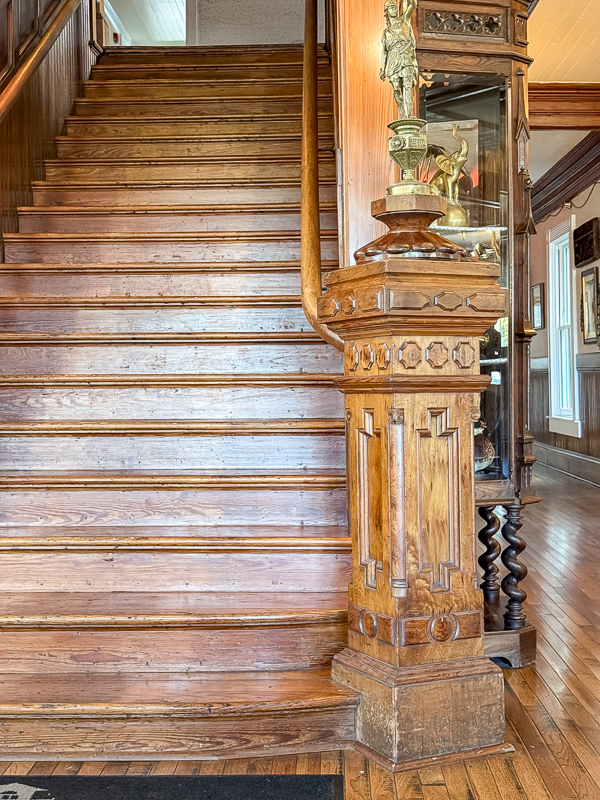
The Gibson Inn post is much grander, with paneled Eastlake carving and a lamp finial on top. If you are building or renovating, ask your carpenter about a custom newel post instead of a stock one.
Pro Tip: Even a simple carved detail like a single rosette adds more old house charm than an elaborate post bought off the shelf.
Trim and Wainscoting
Trim is the detail that does the most work for the least money. Beadboard wainscoting, fluted casing, and raised panel walls all show up again and again in old homes.
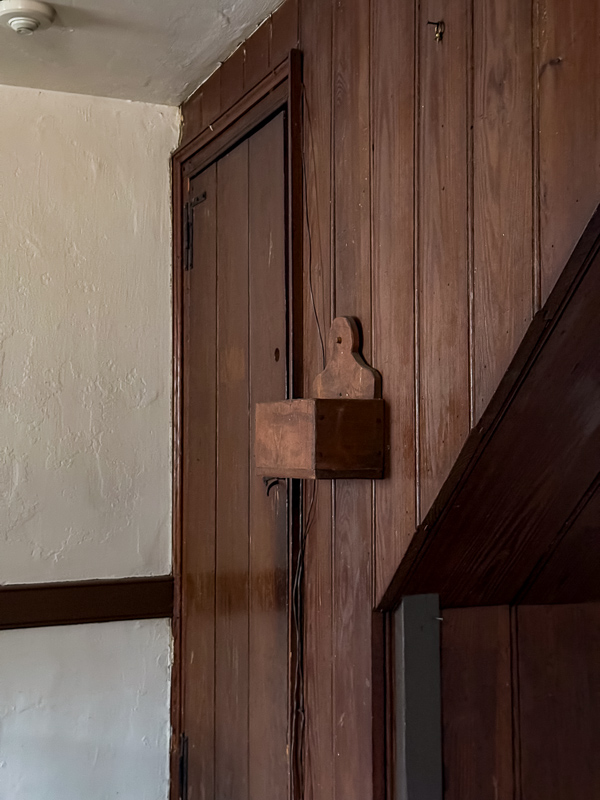
The tongue-and-groove example here is a good one to copy exactly, since the wall boards and the door boards match, making the whole room feel like one piece.
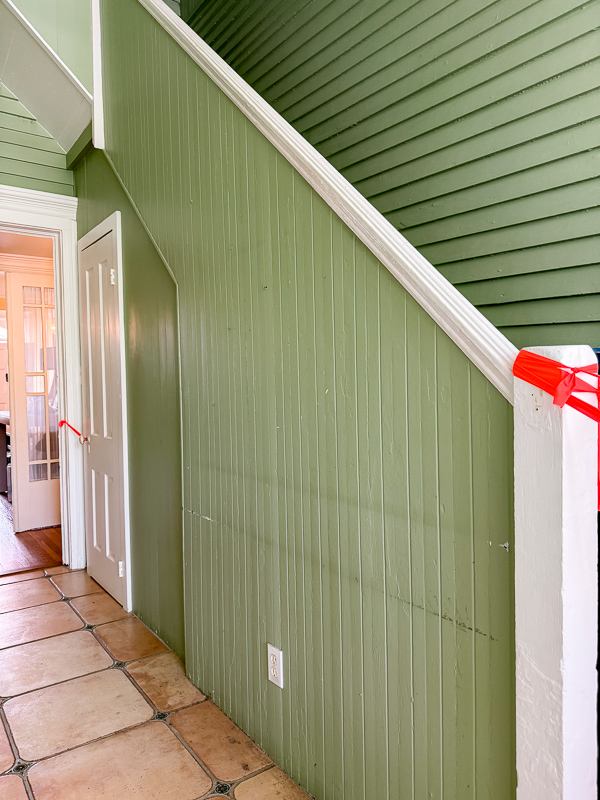
At an estate sale, in a home built in an antebellum style, the exterior stairwell had green beadboard on one wall and shiplap on the other. If you have a stairwell or hallway that feels plain, pairing two simple wall treatments like this is an easy way to add interest without adding cost.
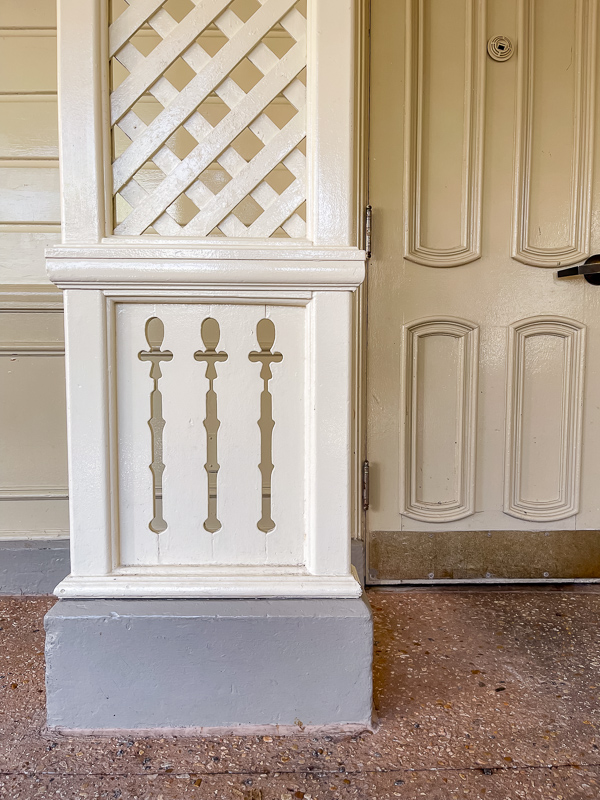
It is amazing where you can find inspiration. This idea for a column came from Disney. I love the lattice work on top and then the carved wood on the bottom. Wouldn’t that be pretty on your interior or exterior?
The bottom part of the column reminds me of a porch railing I saw at Roosevelt’s home. Another creative example.
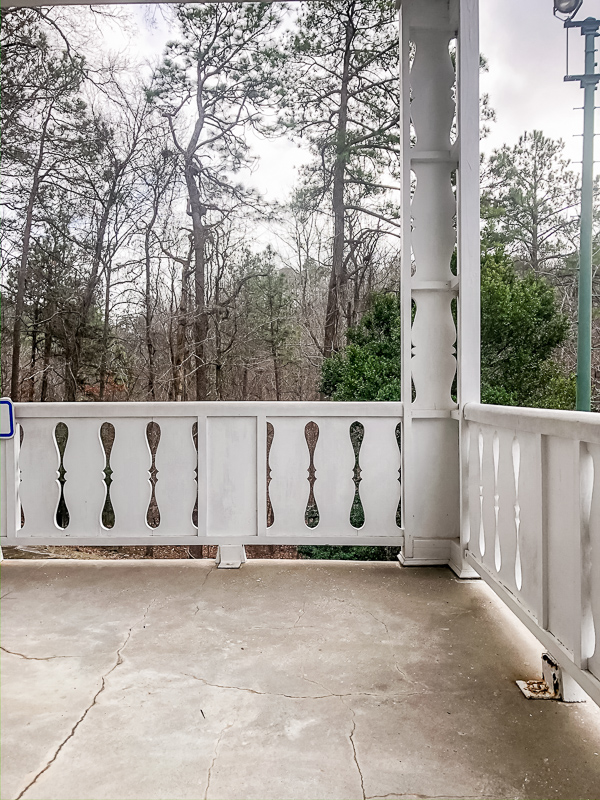
The carved panel design used for a porch railing is clever, unique, and artistic. Now that you have seen this example, you will begin to see more on your travels, too.
Ceilings
In design, we call this the 5th wall, and it is the most overlooked wall in modern construction. A ceiling is the detail most people forget to decorate.
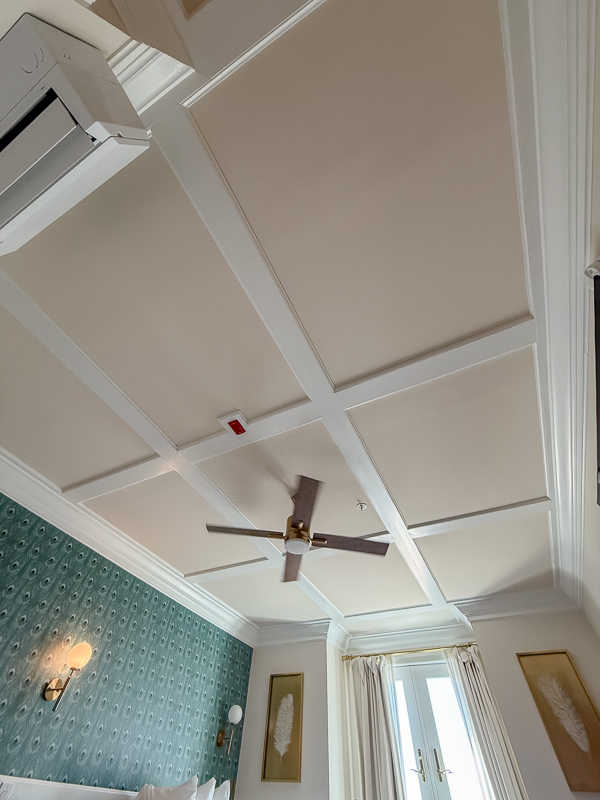
This coffered ceiling, built from simple painted beams, turns a plain new-construction ceiling into something with real architectural weight at The Gibson Inn.
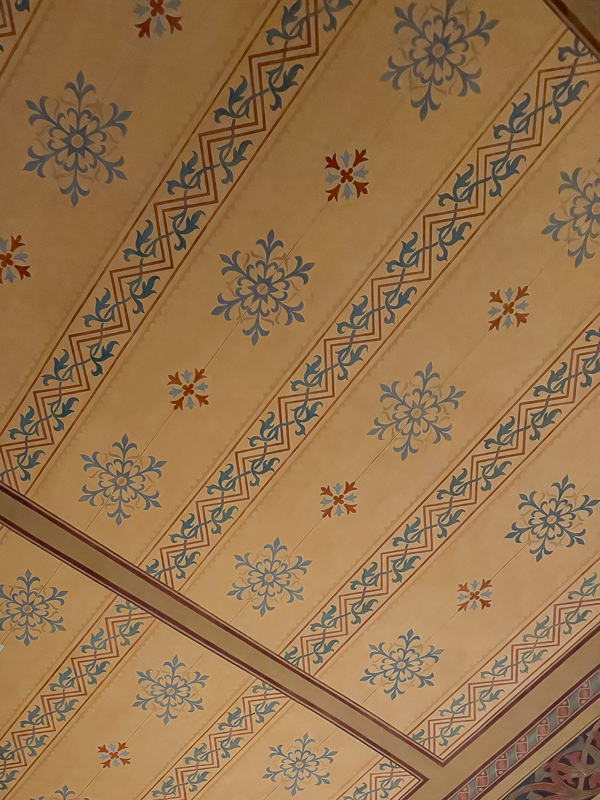
I also saw a painted, almost stenciled ceiling design, possibly in a church, on a river cruise along the Danube. A hand-painted or stenciled ceiling medallion is a beautiful, old-world way to dress up a plain ceiling, especially in a dining room or entry.
Doors
Doors do not need to be fancy to be charming. Source old or handcrafted doors to elevate your new home decor with an old-world feel.
Let’s begin with exterior doors.
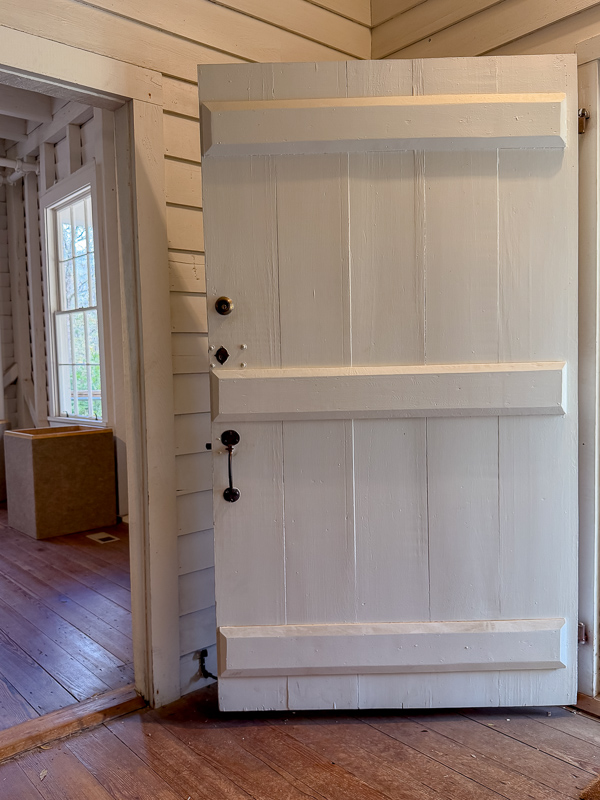
The Bellevue front door is not what you think you would find on a plantation home. It is just wide planks of wood with cross beams. Simple and easy, but super heavy.
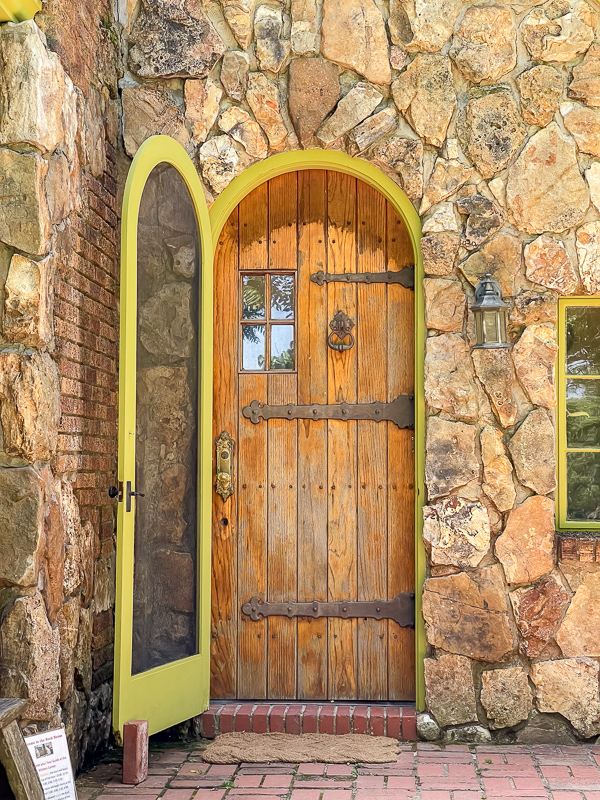
Next is an arched door used on Laura Ingalls Wilder’s stone house. If you really want to add character, use an arched door.
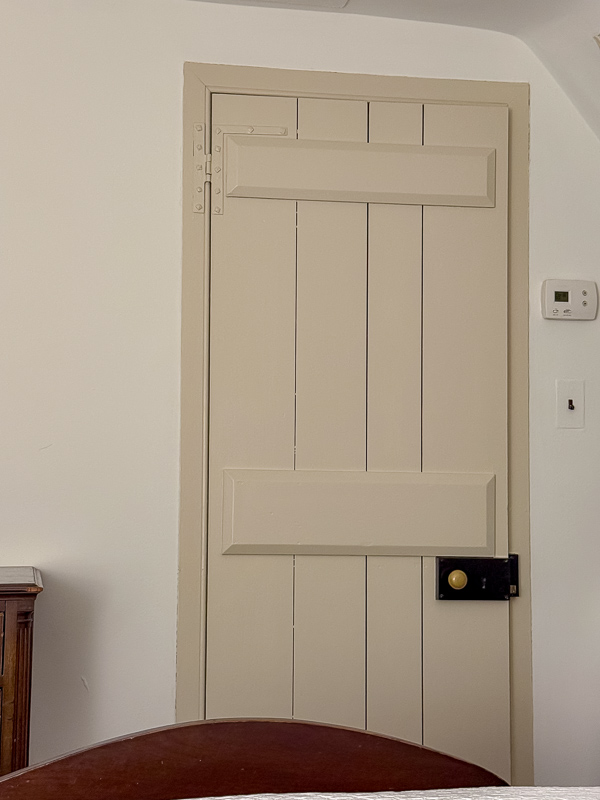
Below is the same concept as the Bellevue exterior door, but used interior, and this handcrafted door was used in Williamsburg, too, at the Robert Carter kitchen.
But I love the door at George Washington’s birthplace kitchen, which is made of boards set on a diagonal. You just never know where you will find door inspiration.
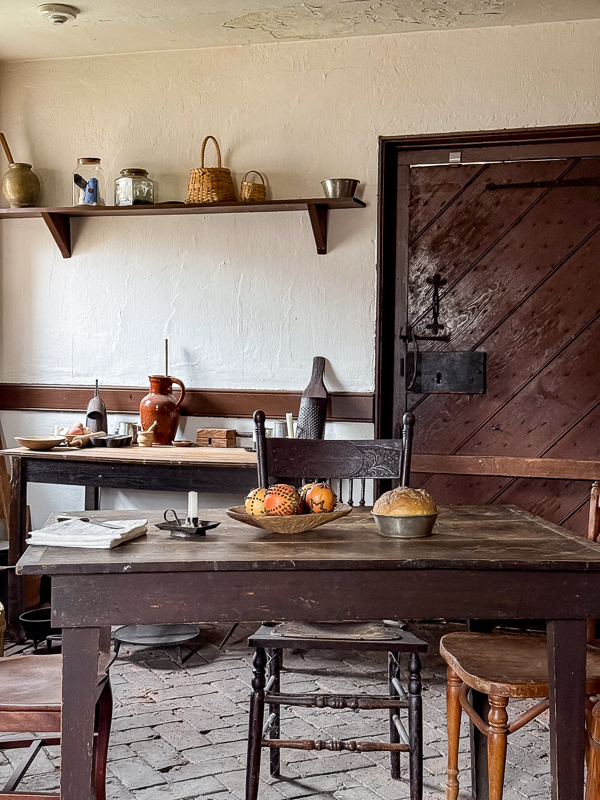
All are proof that a simple, honest door often reads as more authentic than an ornate one.
Flooring
The right flooring can set the tone for your old-world look. Most people think of wood flooring, but there are many options. Let’s start with a brick floor.
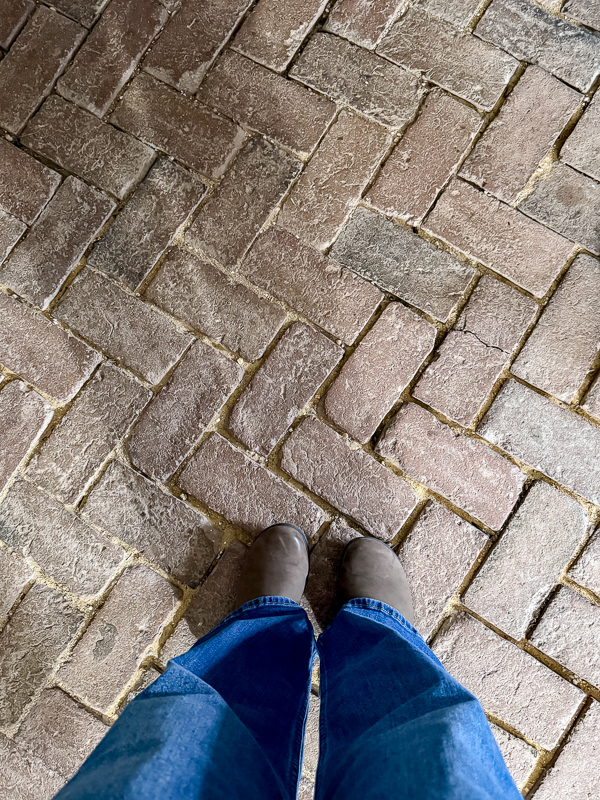
A brick floor shows up again and again in old kitchens and outbuildings. If you have a mudroom, sunporch, or laundry room, a brick or brick-look tile floor is one of the most authentic old house charm ideas you can borrow.
Get creative and look for pattern designs for your brick. Above is a herringbone pattern found at George Washington’s birthplace.
Wood flooring is probably the most popular modern option for giving your home a vintage look.
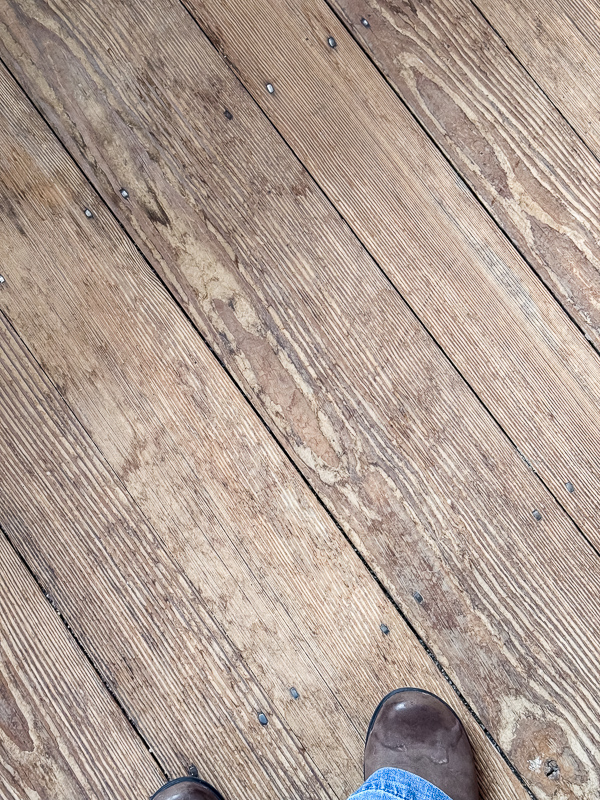
These wide plants at Williamsburg show exactly what I mean. Notice the type of nails, the varying widths of wood, and the unfinished planks. If you want your floors to look really old, go for this type of nail head.
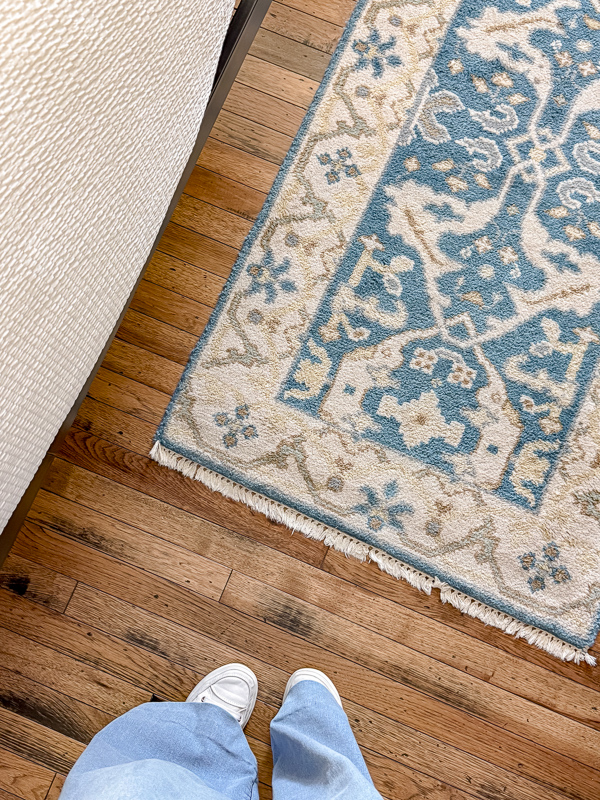
Once your floors are set, add a vintage rug. Now you don’t have to actually buy an old vintage rug because there are so many options today; you can buy new.
Also, notice these wood floors. This is new construction, but the wood floors were reclaimed wood from a home. If you can source reclaimed wood for your new build, then you’re truly adding old-world charm.
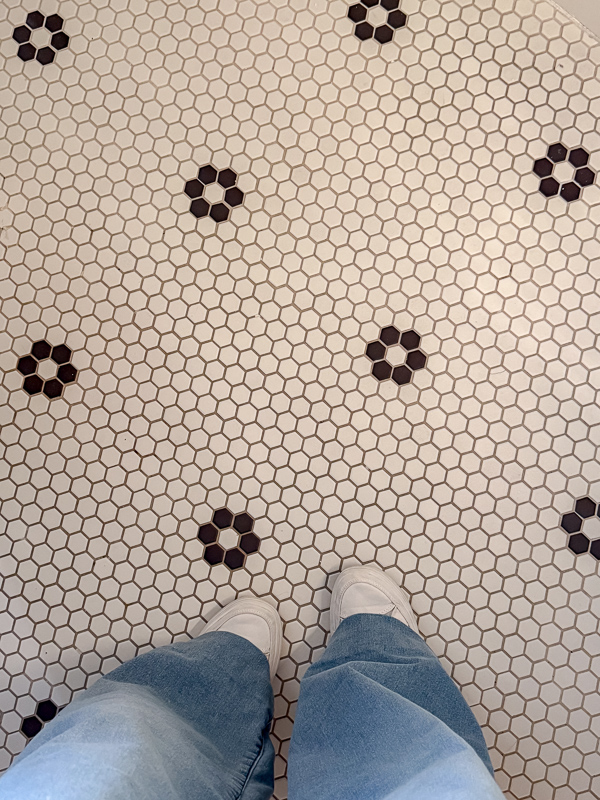
Now let’s talk about old tile designs. Here is an example of one found while visiting Williamsburg. This small hexagon black and white tile design was popular from the 30s through 60s and is still trending today.
These look great in entryways and bathrooms.
Windows
Windows can tell a lot about an old house. The more divided a window pane is, the older a house so consider more panes when selecting your windows.
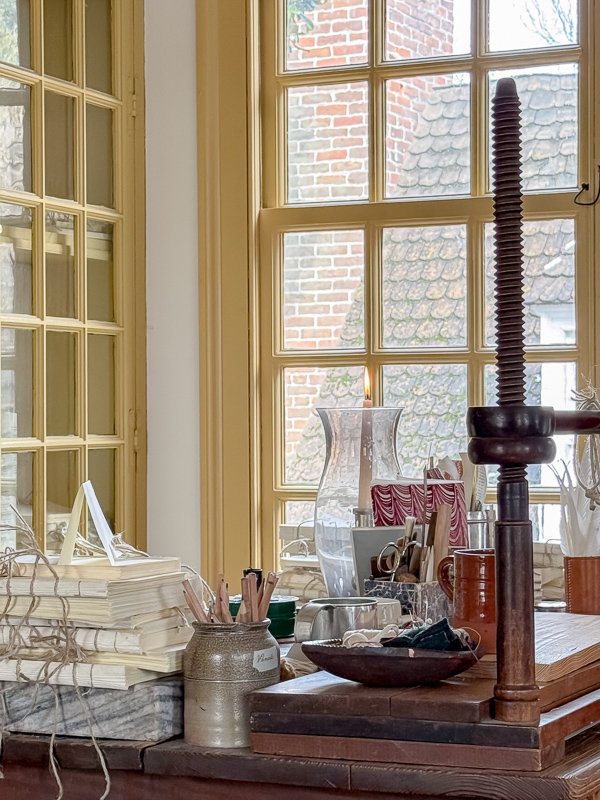
Old homes were often built with nine-over-nine sash windows, meaning that if you count the glass panes, that is a sash. This window in the photo above at Williamsburg has nine panes on top and nine on the bottom.
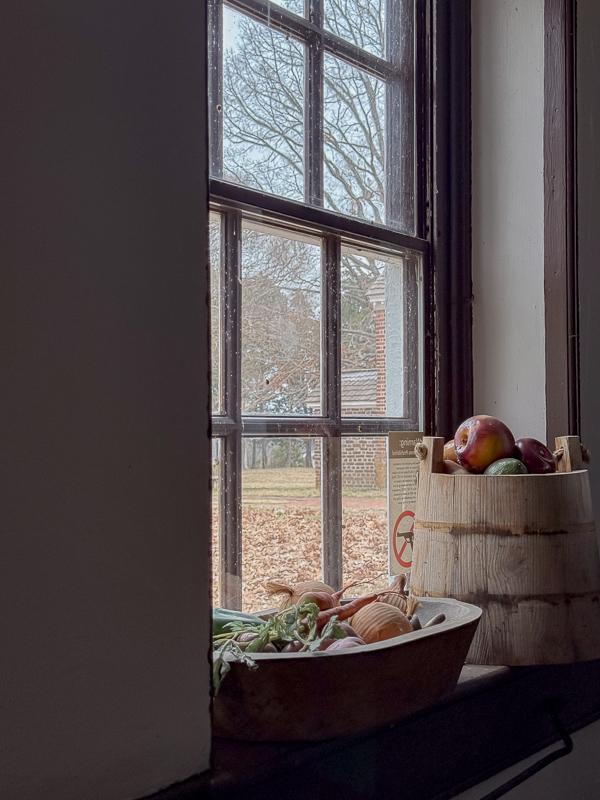
Most new windows skip the muntins entirely, but adding true or simulated divided light panes to your windows is one of the fastest ways to age a new home in the best way.
This window has six over six, which you will find mostly today. These houses are from George Washington’s birthplace, which isn’t actually the house where he was born. They built this structure on the property in the 30s.
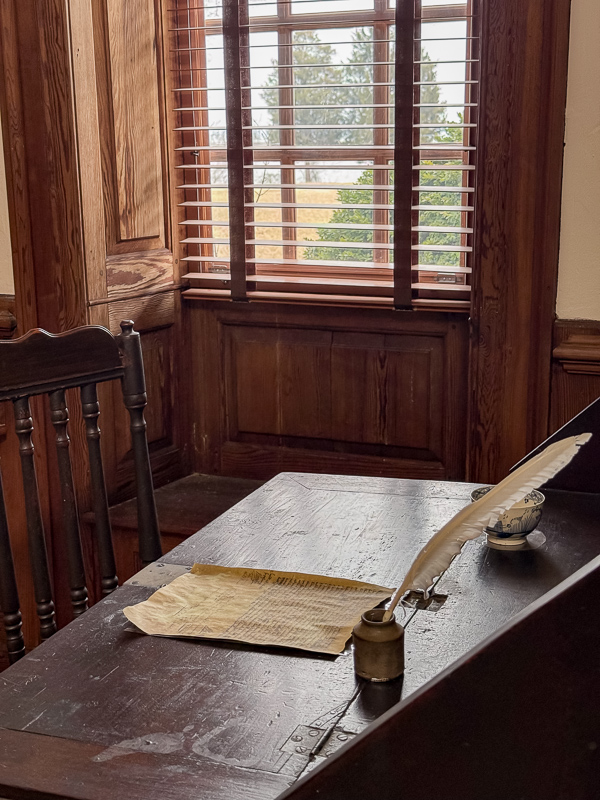
Also, note the raised-panel design on the sides and below the window. Those traditional panels on the sides were used as a shutter for privacy and to block light. Isn’t it neat that they hide in the wall!
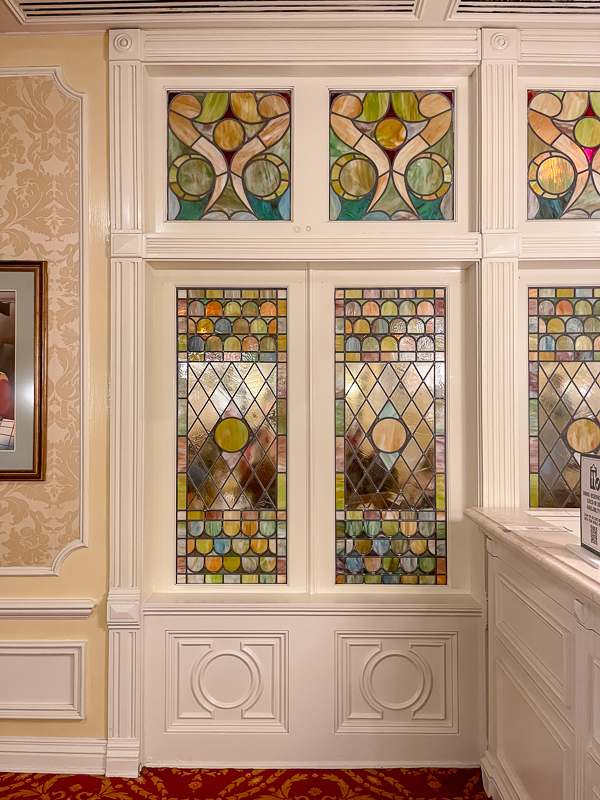
And don’t forget stained glass windows. So many old houses have stained glass, so adding it to your house, either by replacing a window or using it as decor. Here is an example I discovered at Disney.
Fireplaces With Old House Character
A fireplace does not need to be fancy to have charm, but fancy is great too.
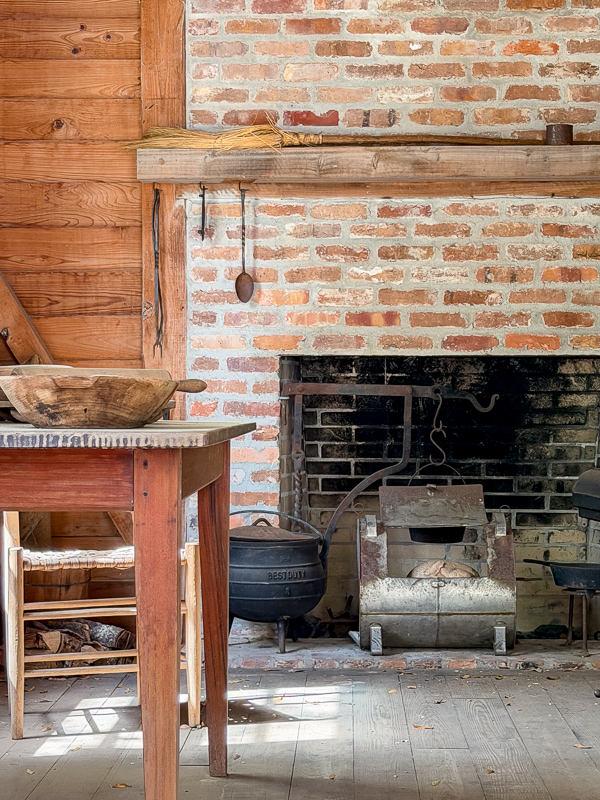
At Bellevue, the firebox runs straight down to the floor, with a single hand-cut beam serving as the mantel.
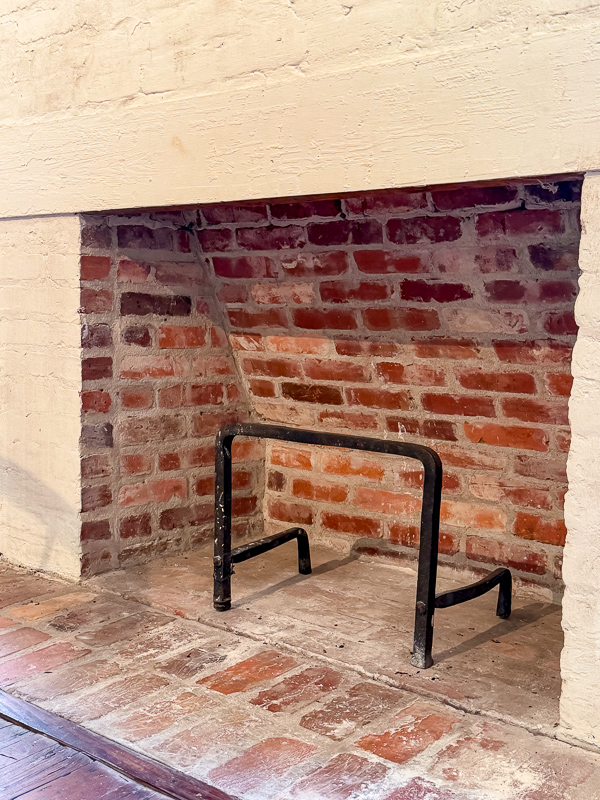
That floor-level detail is the giveaway of an old house. Most fireplaces built today sit up on a raised hearth instead.
Williamsburg gave us the other end of the spectrum. This marble mantel has carved rouge marble inlay panels and a raised-panel design around it in bright blue.
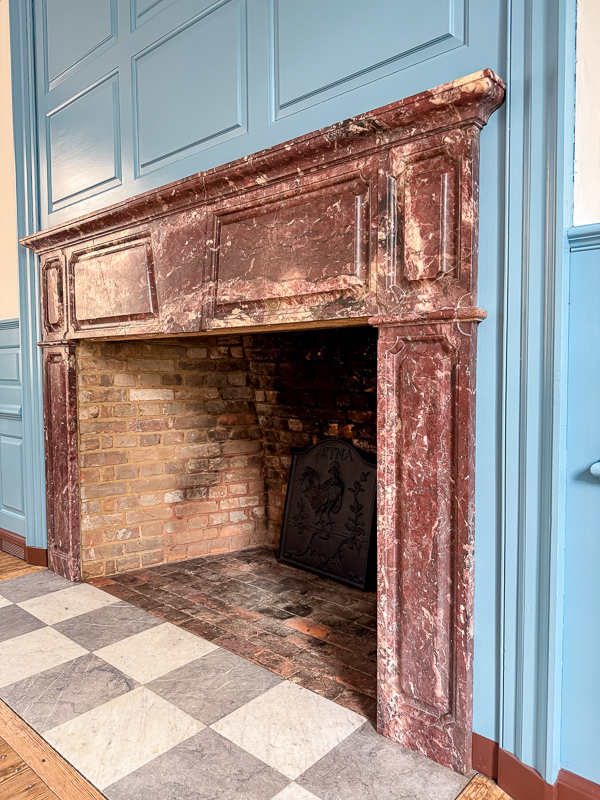
You do not need a marble mantel to borrow this idea. A faux marble effect can give you the same look.
My favorite fireplace of my travels might be this one at George Washington’s birthplace.
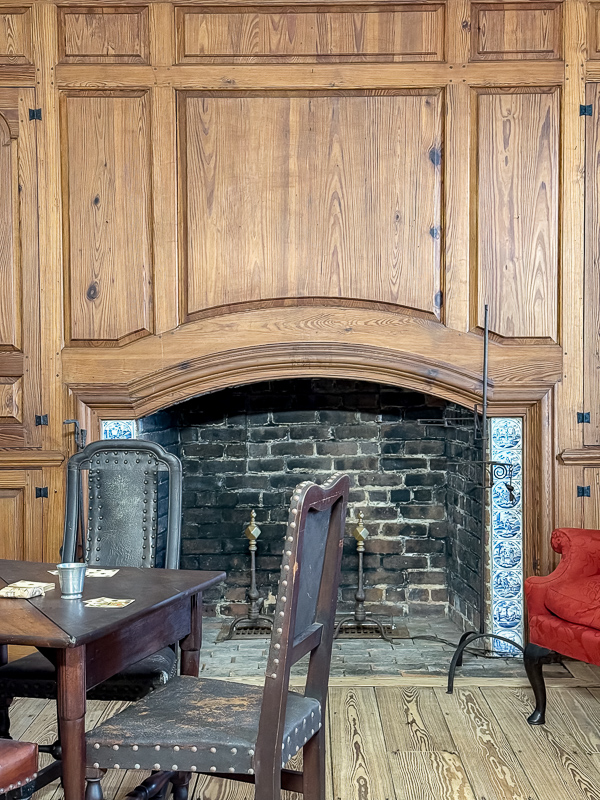
The entire wall around it is a raised-panel design, built from wood that looks like pine, with visible knots.
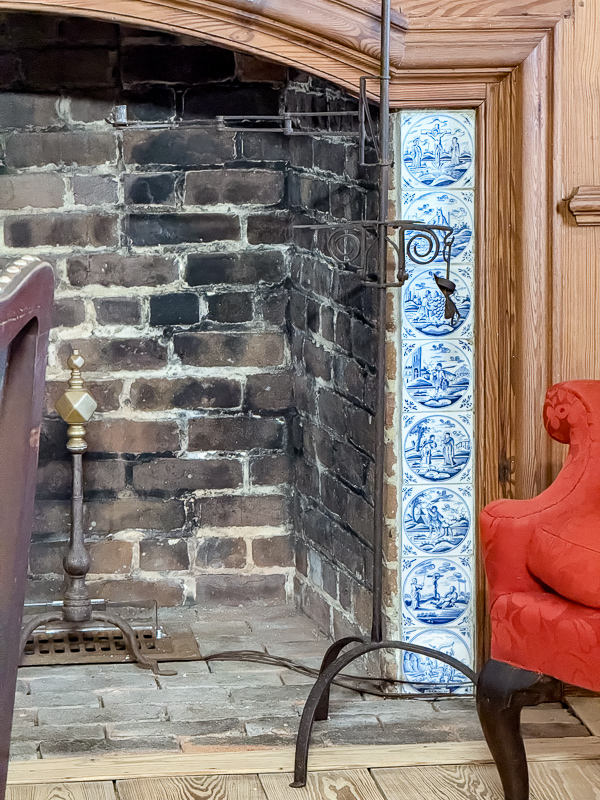
The opening above the firebox is arched, and Delft tiles run down each side all the way to the floor. This one feels the most replicable of any fireplace here, and if I were building a fireplace wall today, I would study this photo first.
Pro Tip: A floor-level firebox, a wood panel surround, and a few rows of Delft or patterned tile down the sides will get you most of the way to this look, even in new construction.
Remember me saying that your fireplace doesn’t have to look fancy in order to feel old? Here is a simple and easy design from the Carter House in Tennessee.
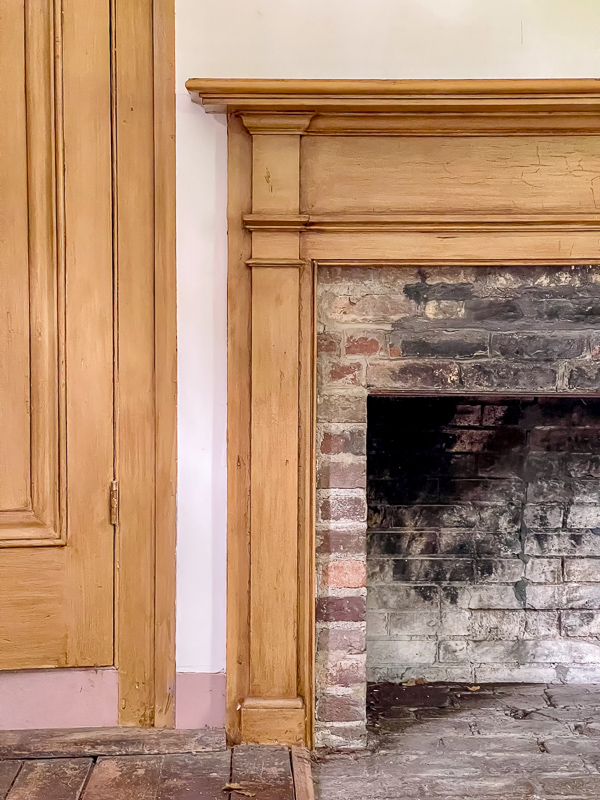
In addition to its simplicity, if you look closely, it resembles a painted faux-wood effect, but I am not 100% sure that was their goal.
Furniture and Accessories Worth Copying
Antique Furniture
Antique furniture is a fantastic way to add character and charm to your new home.
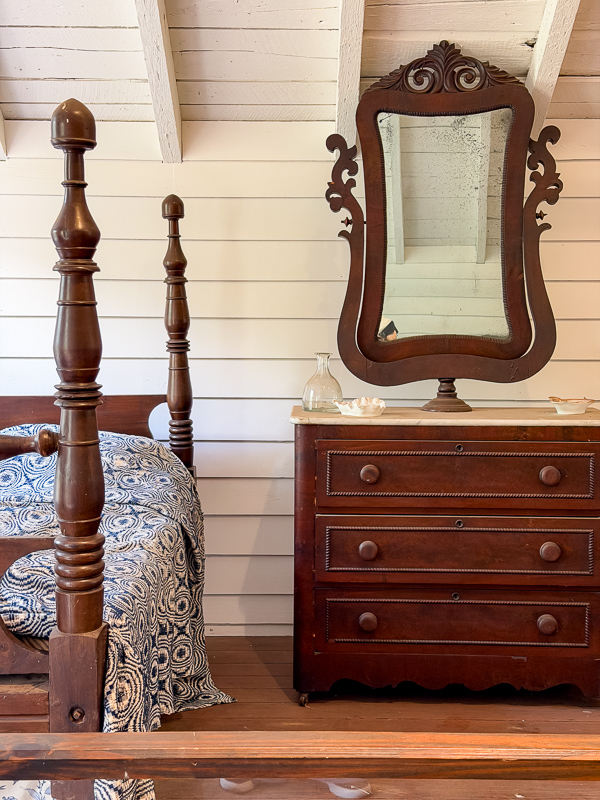
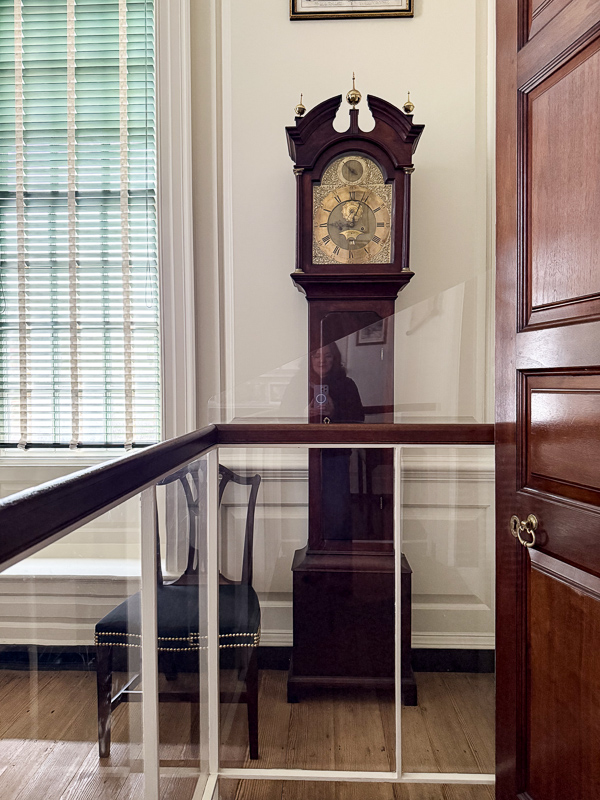
Good antique furniture has presence. A turned post bed, a marble top chest, a tall case clock, these are the pieces that anchor a room and make it feel collected over time rather than purchased all at once.
Old Clocks
Old clocks have a way of adding instant old world charm. There are so many types to choose from. tall-case Grandfather clock I found in the Governor’s Palace at Williamsburg. Or a Mora clock like the one in my own home.
Stay tuned when we talk about examples in my home, and my Mora clock is pictured.
If you want to learn more about mora clocks, I have a whole post on antique mora clocks, including their history and where to find one for yourself.
Chairs
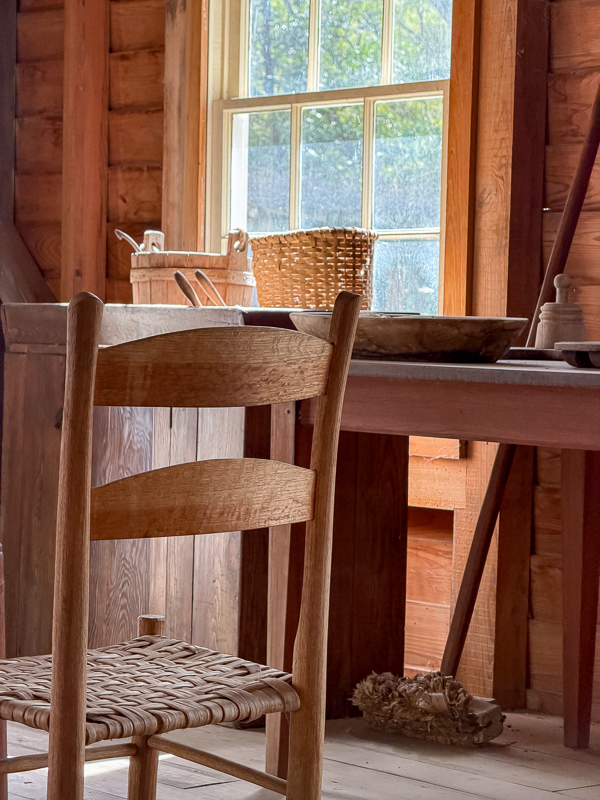
Chairs and tables are easy to source and bring so much character to a room. Look at this ladder-back chair as an example. Decorate with one beside a bookcase or use a set at your table.
Pro tip: If you are hunting for pieces like these, estate sales and antique shops are still your best bet. I cover a lot of this kind of hunting and styling in my book, Vintage Nest, if you want a deeper dive into building a collected look on a budget.
Mixing in Mid-Century Modern
Here is a tip that surprised me. A room does not need to be filled with antiques to feel old.
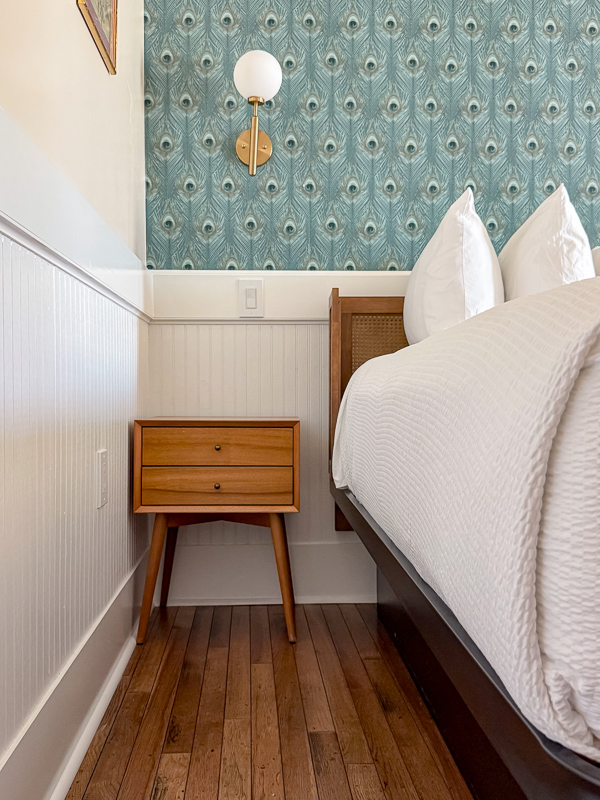
At the Gibson Inn, simple new mid-century pieces, like a tapered leg nightstand, were set against traditional beadboard wainscoting and trim, and the contrast actually made the trim stand out more.
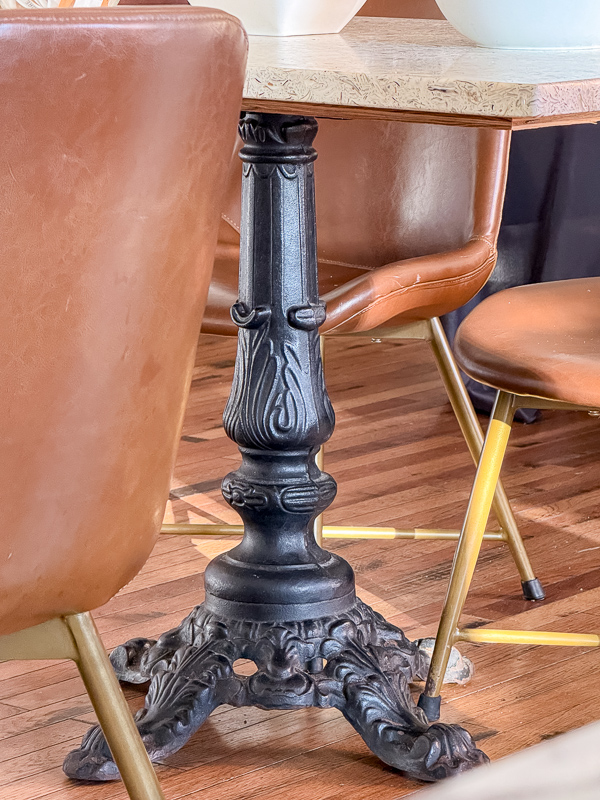
The same trick works with a fully antique piece, too, like pairing an ornate cast iron table base with clean modern chairs.
Good to Know: Mixing eras on purpose, rather than matching everything, is what makes a room feel layered instead of staged.
Canopy Beds
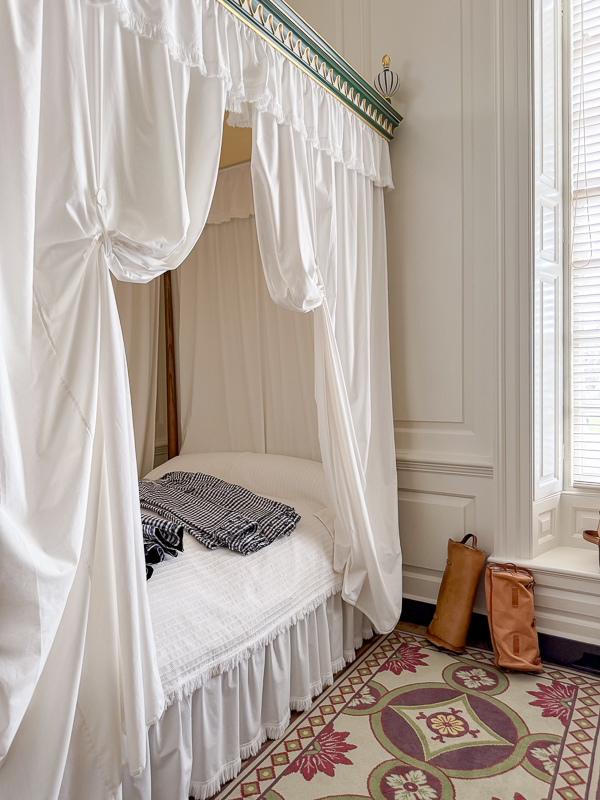
A canopy bed is one of the fastest ways to make a bedroom feel like it belongs in an old home. These two show just how differently you can dress one.
The white version is simple and easy to recreate with a canopy frame and plain curtain panels. The check versions show how much personality fabric choice alone can add.
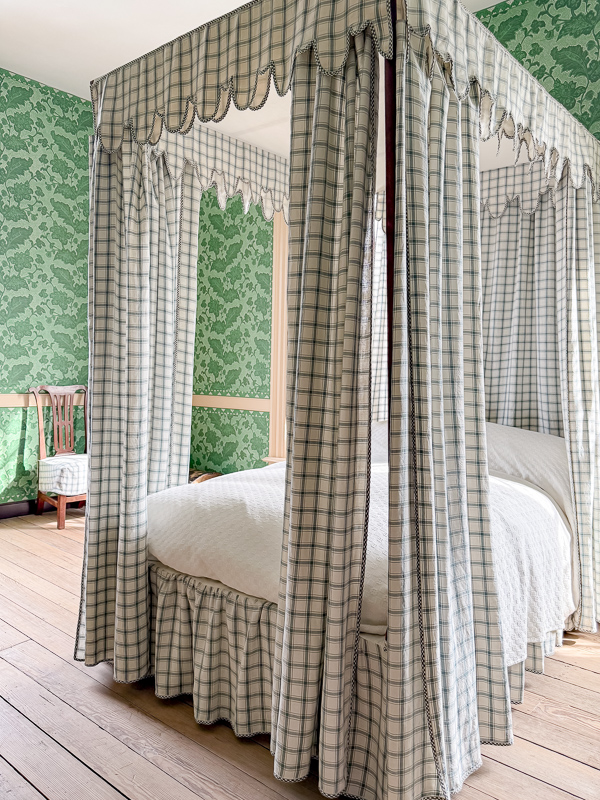
I personally love this check design found at Williamsburg.
Open Shelving and China Display
Open shelving might be the easiest old house charm idea on this entire list to copy.
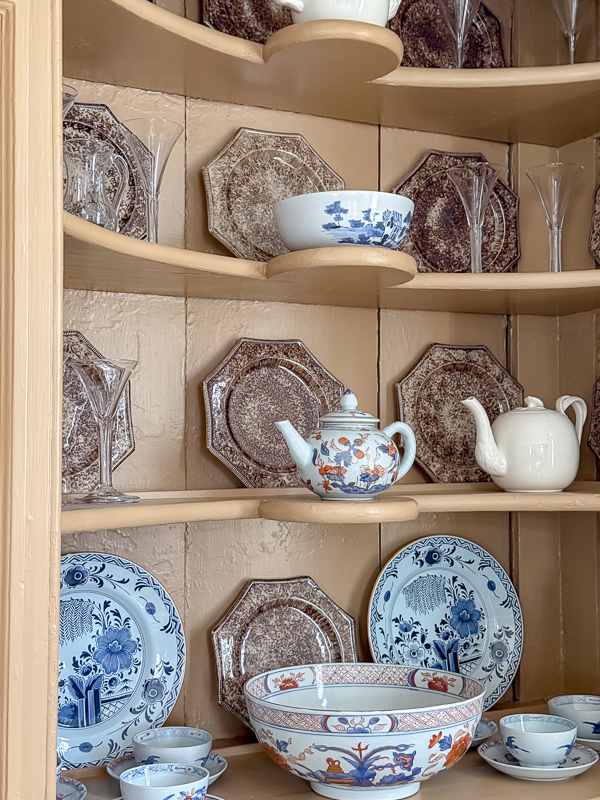
You can source antique china cabinets or bookcases, or have your cabinet maker incorporate china cabinets into the corners of your dining room or in your kitchen.
Every one of these rooms uses the same trick: stack matching or coordinating pieces, like white ironstone or blue and white pottery, and let the collection do the decorating.
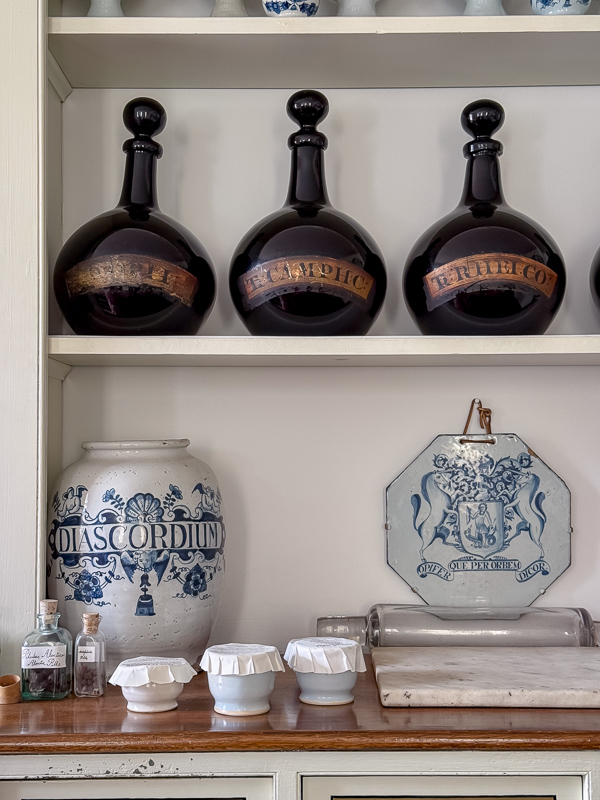
This works whether you have rustic farmhouse shelves or a formal built-in cupboard.
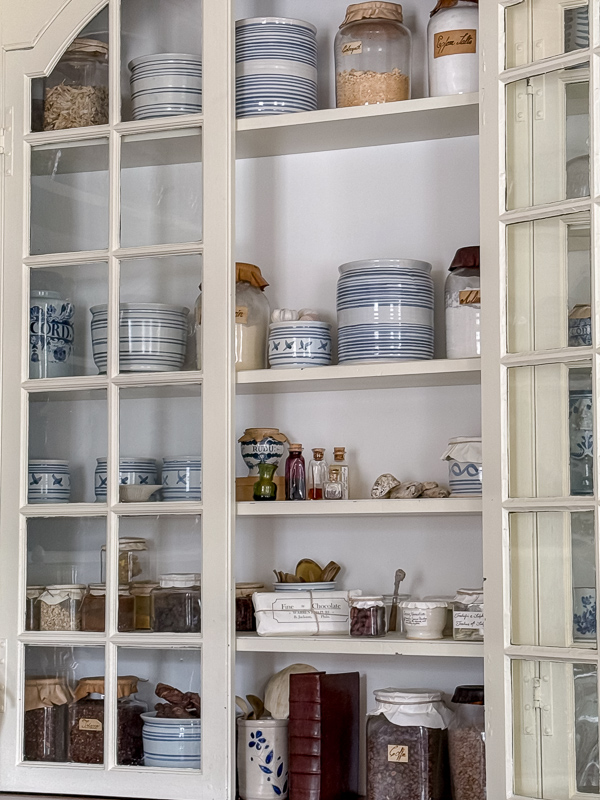
Keep your shelves wood, either painted or stained, and the beauty of these shelves is their functionality as well as their old house charm.
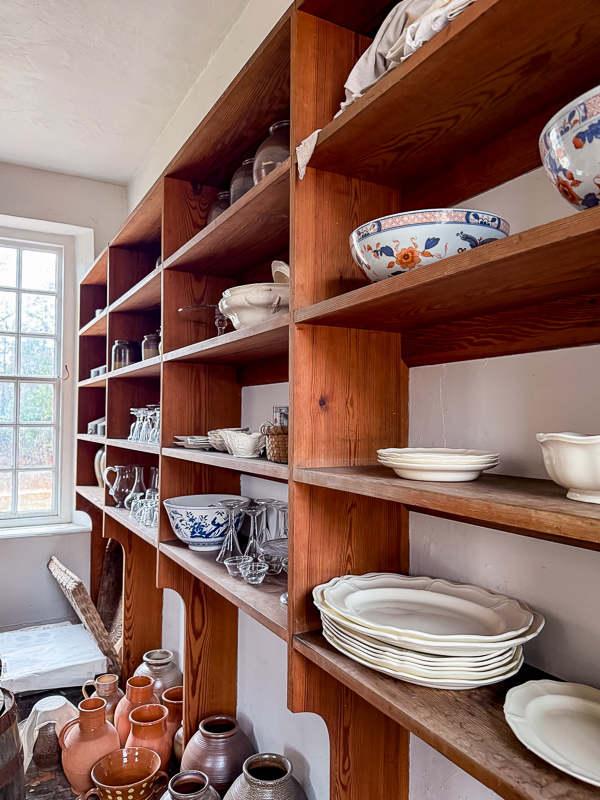
And when deciding on shelving for your closets and pantry, go with wood. It makes your new home feel even older when your storage lines up with your old design.
Small Accessories
Small touches finish a room. It is like the icing on the cake.
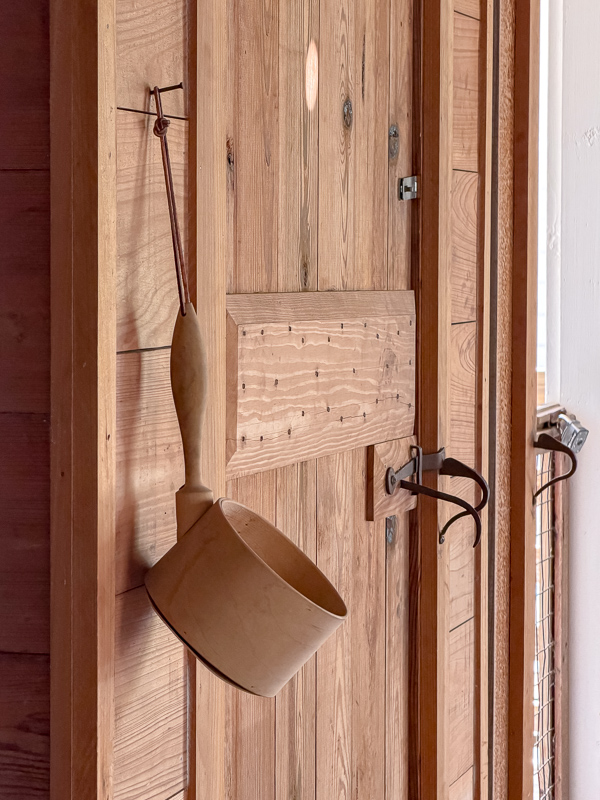
A basket, a wooden dough bowl, brass candlestick holders, a galvanized bucket, a salt glaze pitcher, or a wooden ladle hung from a simple nail; none of these cost much, and all of them read as old house charm.
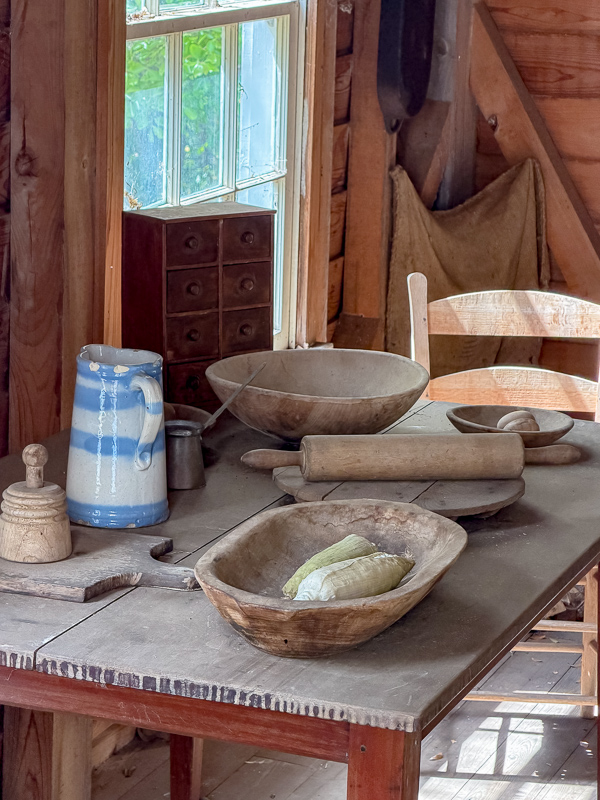
Keep in mind that not every accessory has to be old, but adding in some “museum” pieces here and there really gives your home character. Remember, the best designs are in the details.
Paint Colors That Give Instant Old House Charm
This washstand from Belleview might be my favorite paint color find from all my travels. It is a soft, dusty blue, and if you want to replicate this look, try Dixie Belle paint color Savanna Mist.
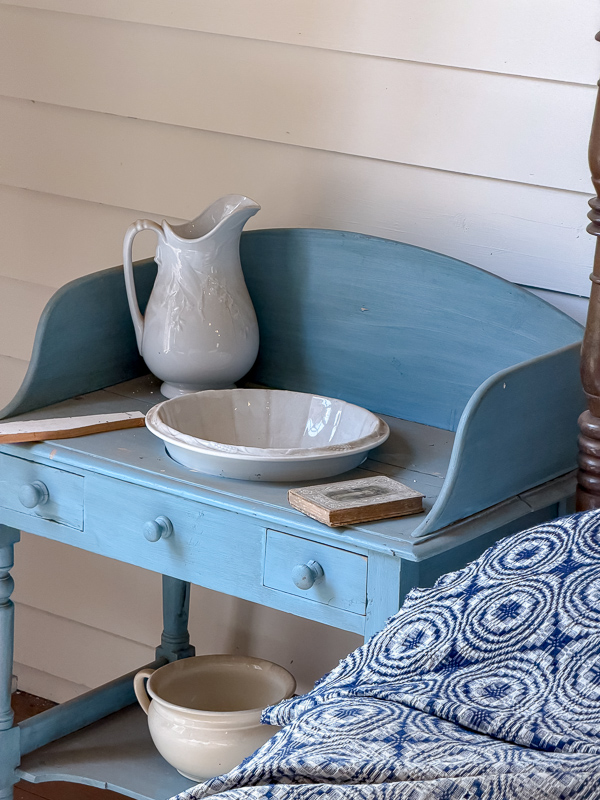
I love blue painted furniture. Use milk paint or chalk paint to get a true old-world look.
Pro Tip: A soft, slightly grayed blue like this one works on furniture the same way it works on a front door. It reads as old without feeling dated.
Williamsburg uses color the way old houses always have, boldly. This green is bright and confident, and paired with all that off white millwork, it never feels heavy.
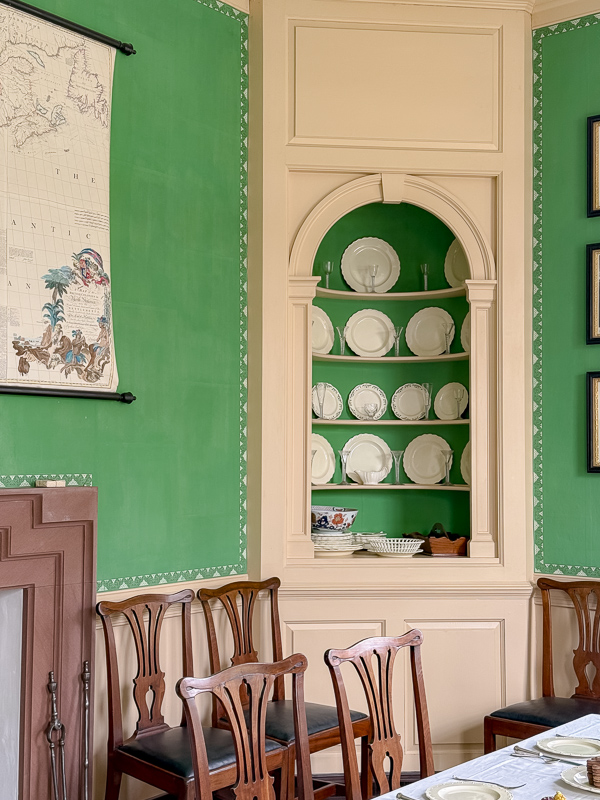
If a full room in this color feels like too much, the same green works beautifully on a single accent wall, a door, or even your kitchen island.
Paper Hangings and Murals
People today call it wallpaper, but back in the 1700s and 1800s, it was called paper hangings. Whatever you call it, it has always been one of the fastest ways to bring old house charm into a room.
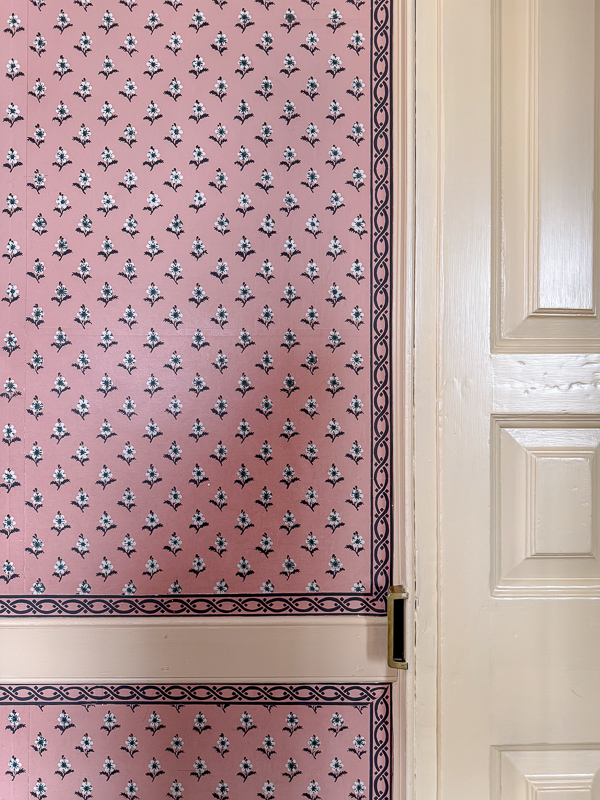
This dusty pink wallpaper is proof. Small scale floral prints with a contrasting border were everywhere in old homes, and they still feel fresh today.
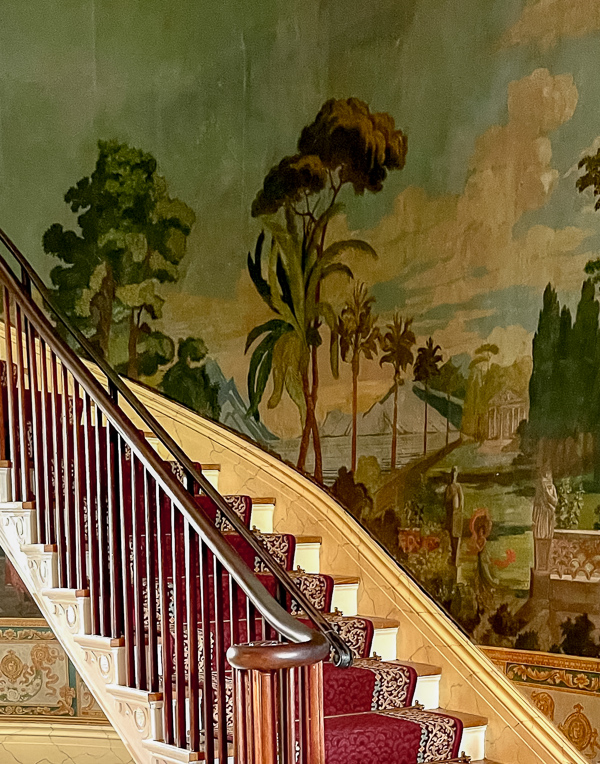
Andrew Jackson’s home, the Hermitage, has one of my favorite scenic murals. The wallpaper in the entrance hall was hand-printed in Paris in the 1820s, and it wraps the entire entry in a single continuous painted scene. A mural like this turns a hallway into a destination.
Good to Know: You do not have to import French paper to get this look. A hand-painted mural can do the same job for a fraction of the cost, and it gives a room a one-of-a-kind feature you can’t buy off a shelf.
My friend Miss Mustard Seed has painted murals in two different homes now. Her most recent dining room mural was inspired by old French block print scenic wallpaper, and it is stunning.
I have been dreaming about doing something similar in my own entryway, and looking at her process makes me think it might actually be doable.
Hardware and Lighting With Character
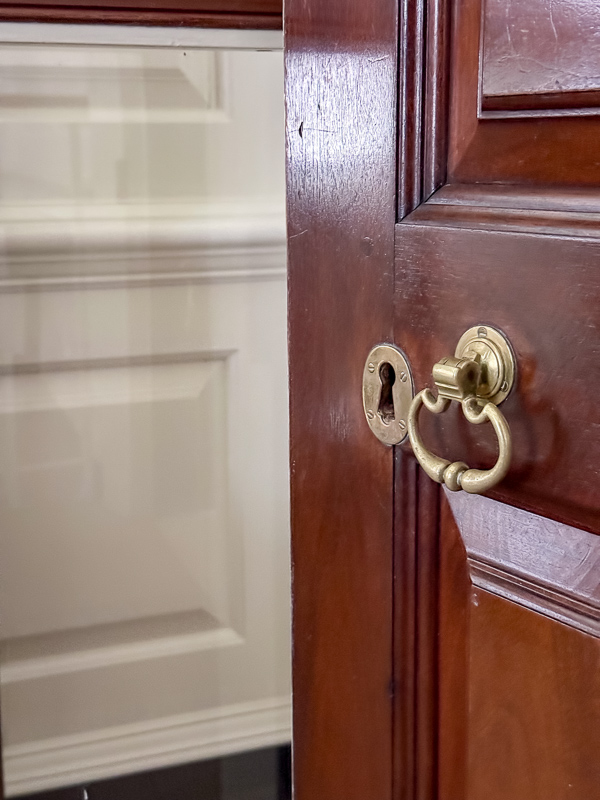
Hardware is one of the fastest upgrades you can make to a piece of furniture or a door. This brass drop-bail pull, with its keyhole escutcheon, is a classic shape worth searching for the next time you are furniture shopping.
At an antebellum style estate sale home, the door hardware was ornate and noticeably bronzed, almost like it had aged into the door itself.
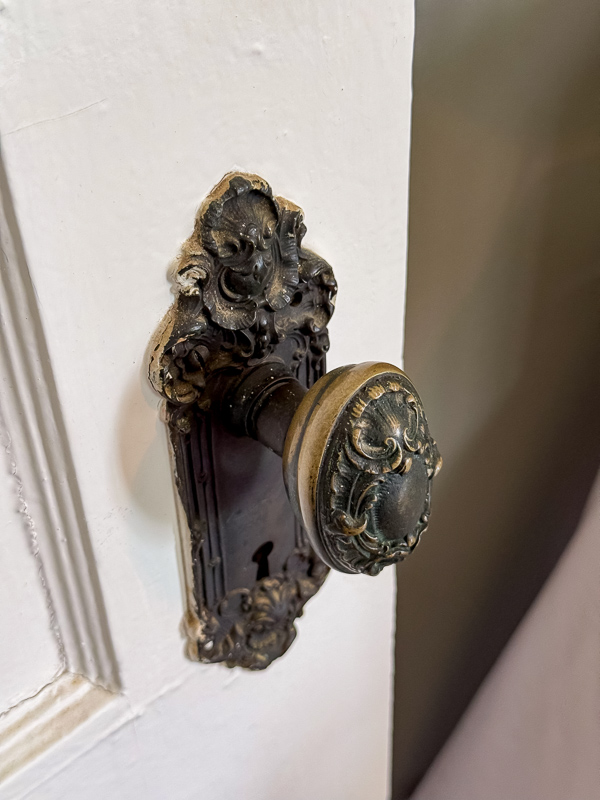
If you want hardware to look old immediately, look for a bronze or oil-rubbed finish with some texture, rather than a smooth, bright finish. Van Dykes is a great place to shop for vintage hardware.
Good to Know: Hardware finish does more to age or modernize a room than almost any other single choice. When in doubt, choose something with a little texture and patina over something polished.
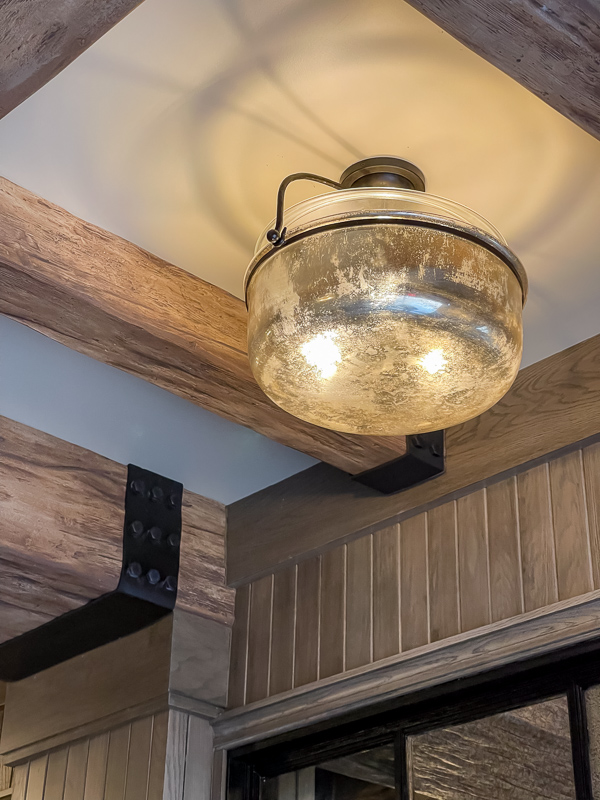
Another example is looking for new lighting with an old-fashioned feel. This light in Epcot at Disney reminds me of a pot which just happens to be in a restaurant in France.
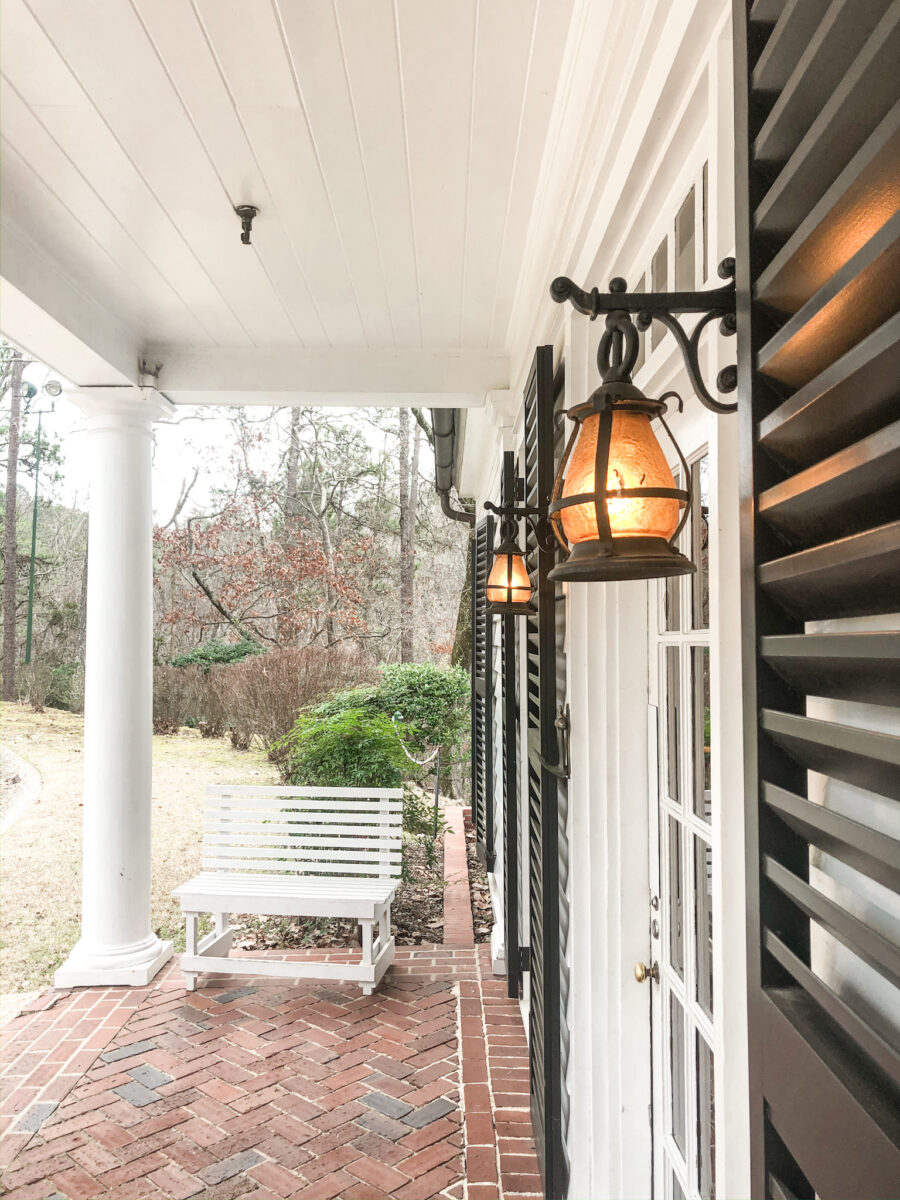
Outdoor Charm: Porches and Curb Appeal
A good porch invites you to sit down before you even get to the front door.
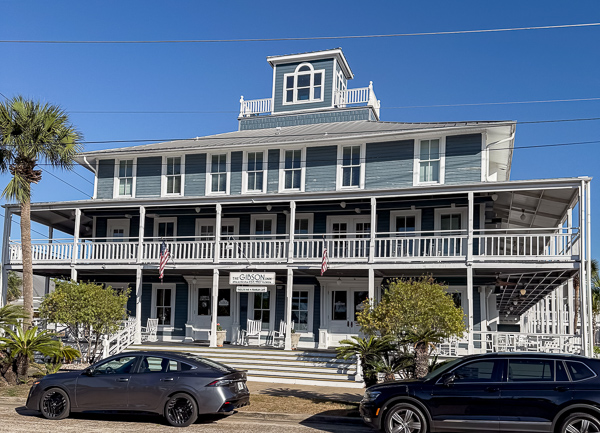
The Gibson Inn’s wraparound porch, lined with simple rocking chairs, is proof that the porch itself can be the decoration.

A small detail like this cast iron horse head hitching post adds instant history to a front yard. You do not need an actual hitching post function for it. It works just as well as a piece of garden statuary near a front walk.
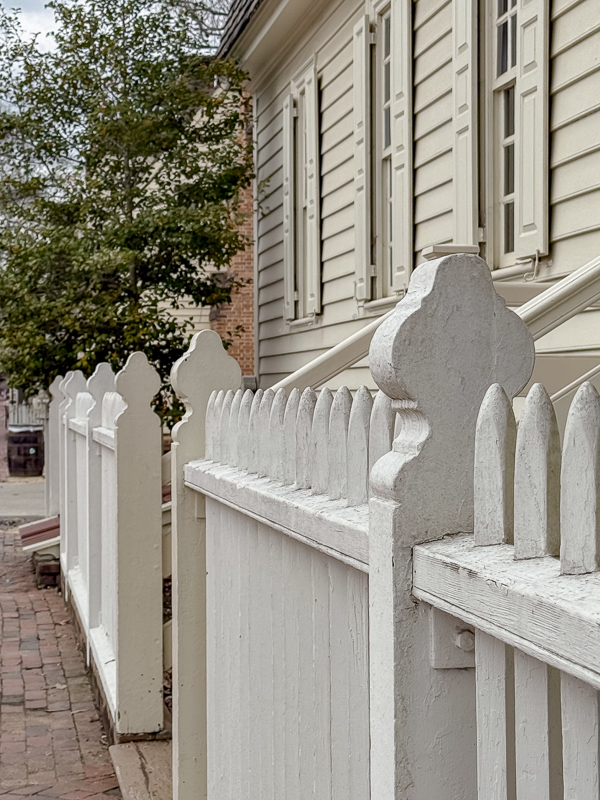
A white picket fence paired with dark shutters is about as classic as curb appeal gets. It is also one of the more affordable ideas on this whole list to actually build.
And don’t forget shutters if they lend themselves to your design. You can go with homemade-style shutters for a more primitive look or dress it up with louvered shutters like these on the back of the Hermitage.
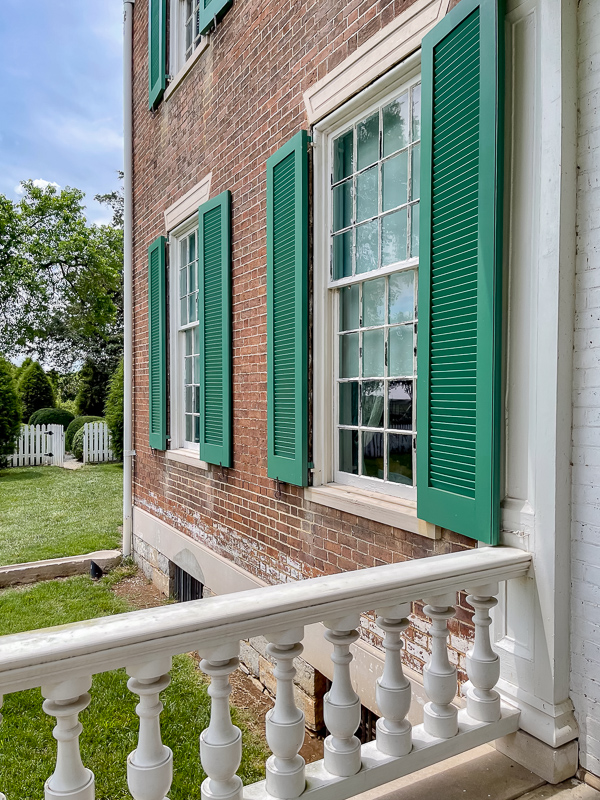
If you make the shutters functional, that makes your new home look even more real old. If not, add the hooks along the bottom as if they were real. And make sure your shutters are the height of the interior of the window. Think, if they really shut, would they fit inside your window?
Also, notice the trim design above the window. It is the little details that give it character.
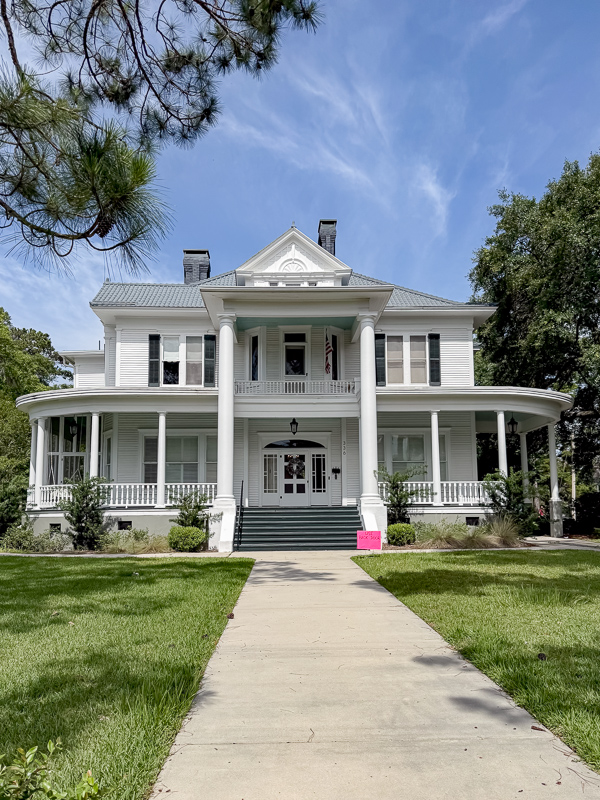
At that same antebellum estate sale home, the porch ceiling was painted haint blue, a tradition that goes back generations in the South.
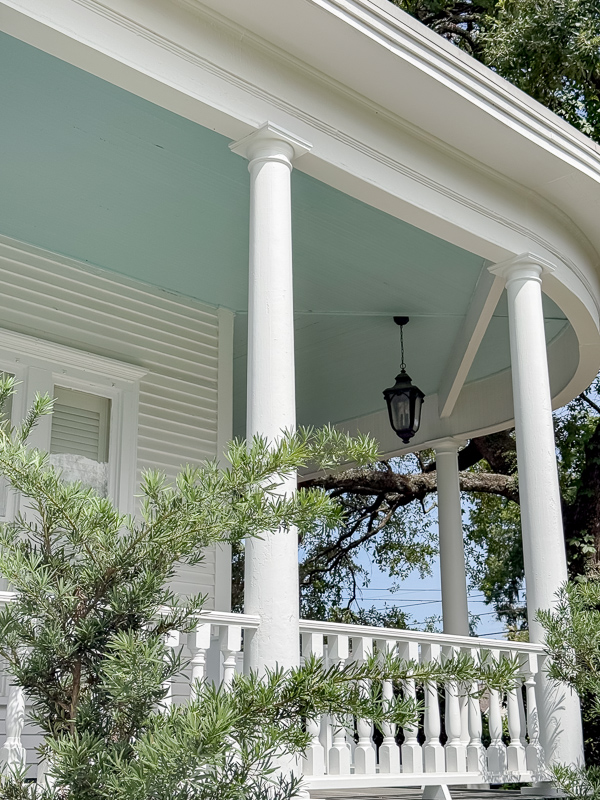
No matter the size of your home, painting your porch ceiling the same soft blue is an easy, affordable way to borrow old-house charm.
That same porch also had a beadboard ceiling, tall columns, and white shiplap walls. A beadboard porch ceiling is a project nearly anyone can take on in a weekend, regardless of their home’s size or age.
Garden and Landscaping Charm
This tree-arch tunnel might be the prettiest landscape photo from the entire trip. It takes years to grow, but even a small version of this idea, like a single arbor over a garden gate, borrows the same feeling.
Can you imagine how pretty it is in the spring?
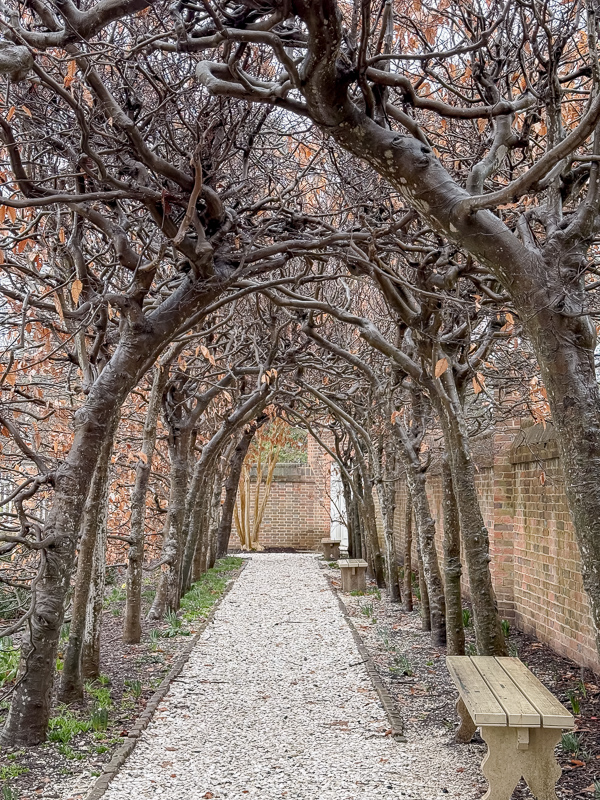
A simple gravel or shell path, lined with a clipped hedge and a plain wood bench, is an easy garden upgrade that does not require a large budget or a large yard.
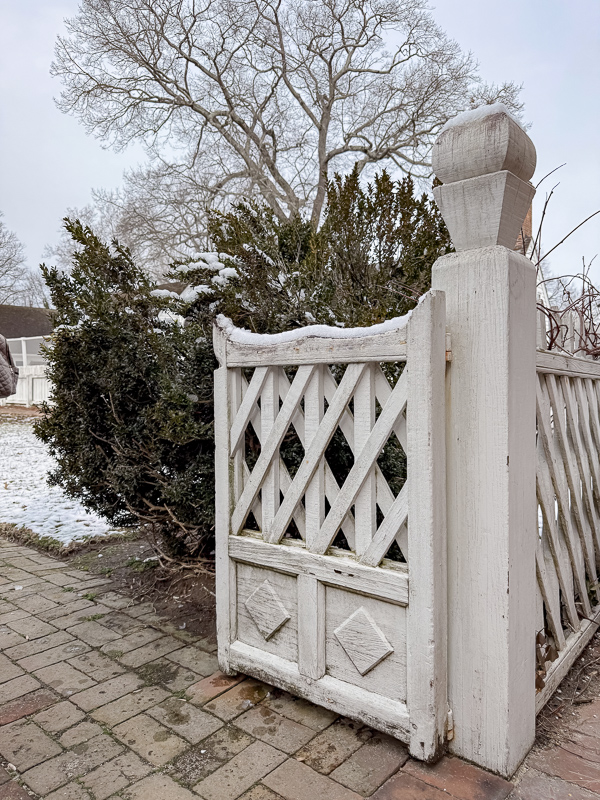
A garden gate is a small investment that makes a big first impression. This lattice gate, with its decorative finial post, is the kind of detail a handy homeowner could build in a weekend.
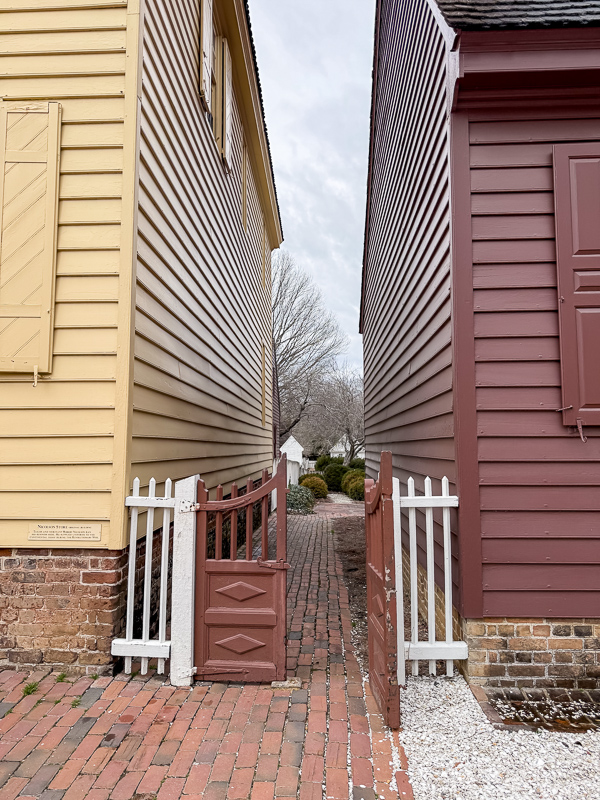
Even a fence post can carry old-house charm if it has a little shape to it rather than a flat-cut top.
How to Bring Old House Charm Into a New or Builder-Grade Home
My own home is proof that this works. I live in a builder-grade suburban home that needed lots of warmth and character.
For accessories, I have a mora clock in my living room, and it sits right alongside newer upholstered furniture without either one feeling out of place.
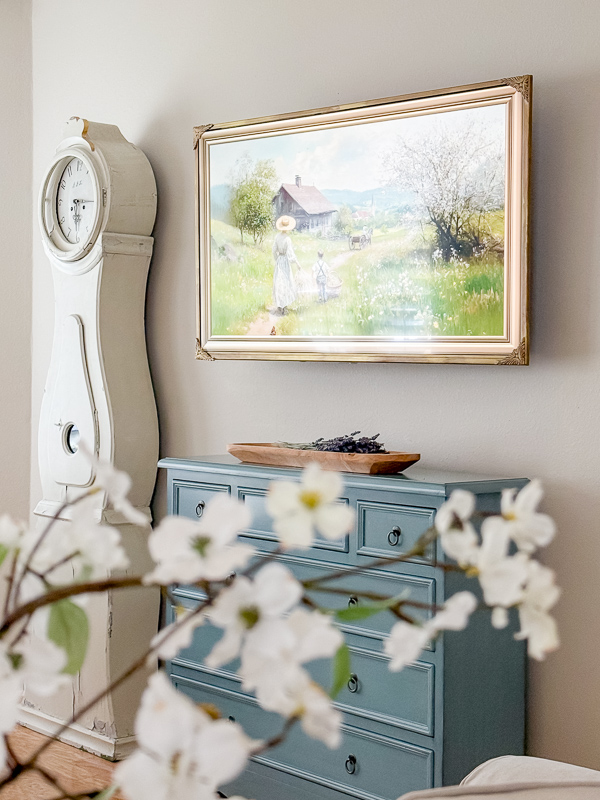
That’s the trick. You do not need every piece in a room to be old. You just need one or two pieces with real history to anchor the room, the same way the clock anchors mine.
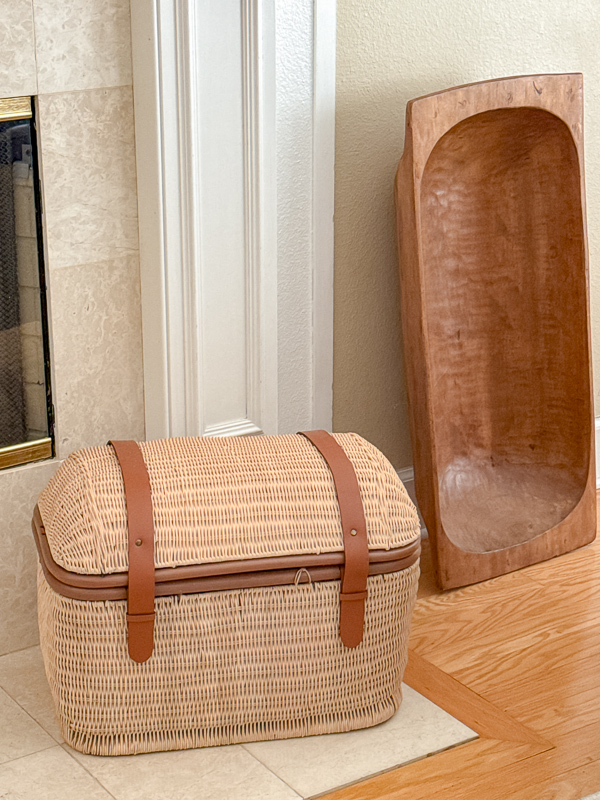
And old wooden dough bowls are a personal weakness. You will find many lying around throughout my house.
Trim and windows are another easy fix. When we bought this house, our windows had no trim at all, which is about as builder-grade as it gets.
I added trim around most of the windows in our home and installed plantation shutters. Between the two, our windows finally look like they belong in an older house instead of a new build.
Then, in my entryway, I added a raised panel wainscot. The chair rail was already there; all I had to do was add the boxes.
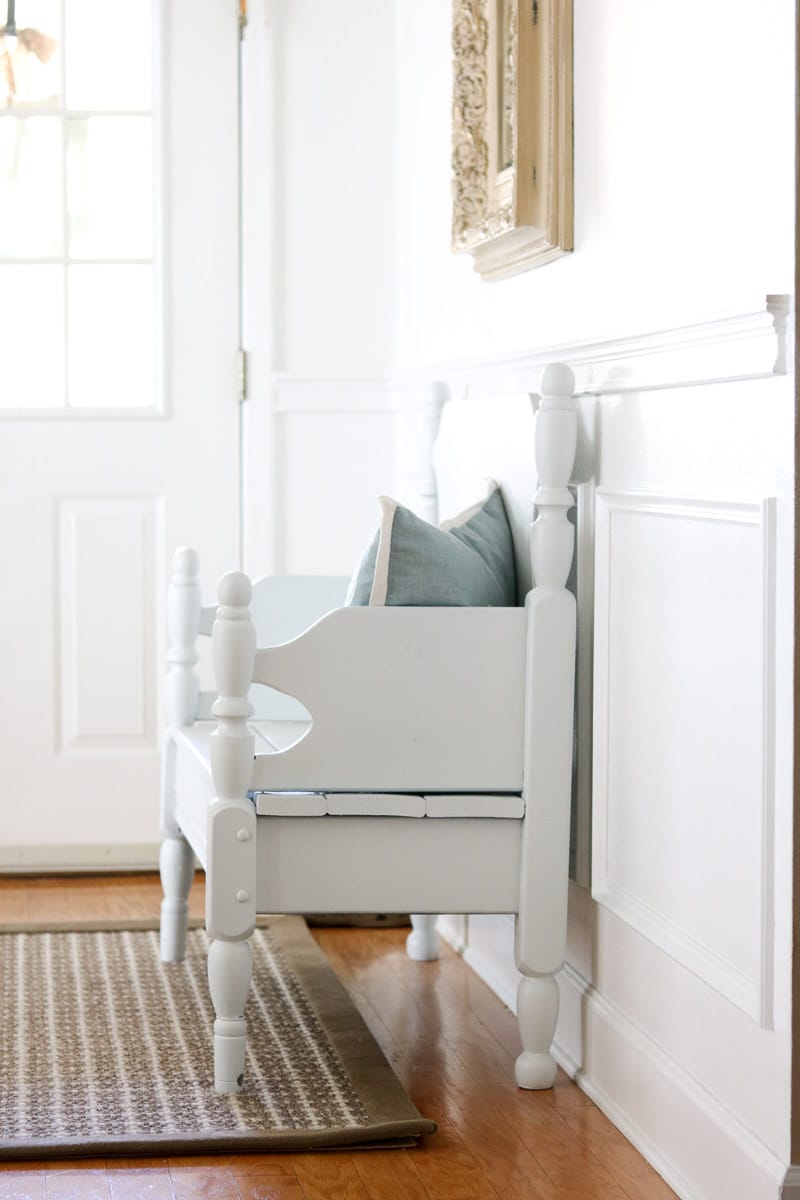
The more you hang around my website, the more places you will see where I added more trim and old details to the walls.
The fireplace made the biggest difference of all. We removed the original builder-grade mantel and built a new one with a more vintage look, then added marble tile around the surround.
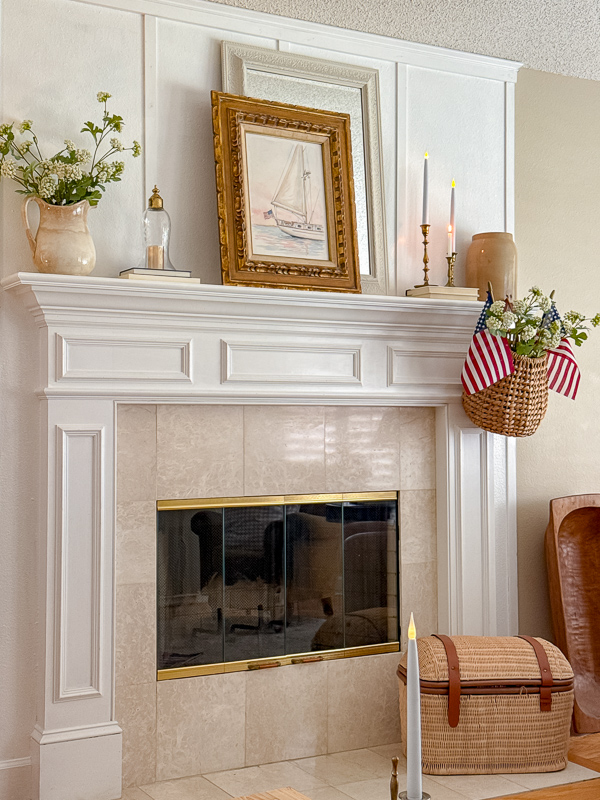
Years later, I finished it off with a DIY board and batten treatment above the mantel. It was such an easy, beginner-friendly project that I did the whole thing myself in one weekend.
But you can thrift or vintage shop mantels which work great in rooms without a fireplace. Here is one I saw at a vintage shop. Just imagine the possiblities.
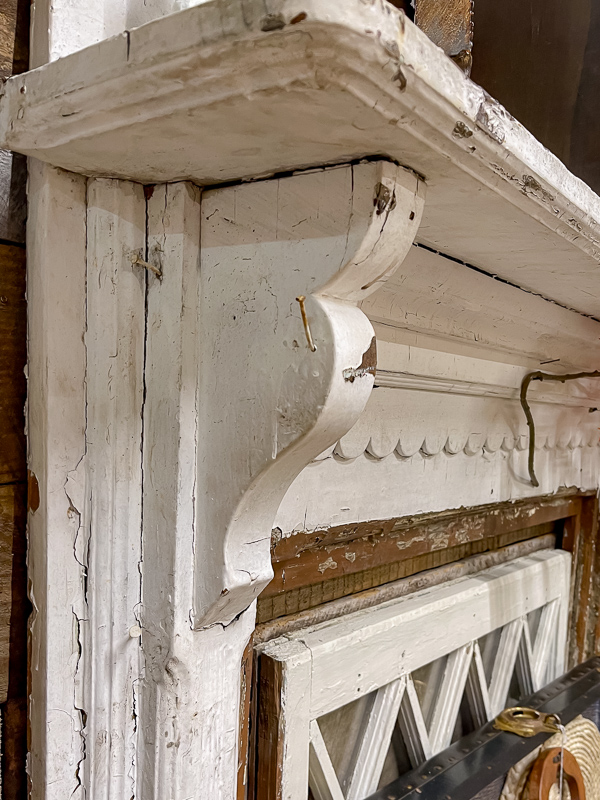
Pro Tip: If you only do one thing from this section, do the fireplace. A mantel and surround change the whole feel of a room, and you do not need an old house to get an old-feeling fireplace.
Frequently Asked Questions
Can a new house have old house charm? Yes. The details matter more than the age of the house. Trim, paint color, and hardware can age a brand new room in the best way.
Do you have to use antique furniture to get this look? No. There are many new pieces of furniture that are designed to look old.
What’s the easiest old house detail to start with? Paint color and hardware. Both are inexpensive, and both make an immediate difference without any construction.
Bringing It All Together
Adding old-feeling elements to your home gives it so much more character, coziness, and charm. The good news is, you have options for how to get there.
You can thrift real old doors, hardware, and furniture. You can also buy new pieces made to look old, or have a craftsman build them for you. My post on decorating with thrift store finds gives you loads of ideas.
Doors are a good example. You can find salvaged doors pulled from an old house and have them stripped, stained, or repainted. Or you can have new doors made to match the style you love.
Good to Know: Buying old does not always save you money. Handing a salvaged piece to a contractor to strip, repair, and refinish can cost more than buying new. If you can do that work yourself, you will save the most.
Whenever you get the chance to visit an old home or building in the style you love, slow down and look at the elements. Ask yourself, can I replicate this now?
Wood floors, beadboard, and shiplap all existed in homes from the 1800s, and you can still install every one of them today. If you love the old look but want new materials, companies like Van Dyke’s Restorers make reproduction hardware and doorknobs you can buy right now.
You do not have to choose only old or only new. Most old house charm comes from picking the right details, no matter where they come from. Most of all, have fun with it and let your home tell its own old-world story.
Happy Decorating!